

How to Manage Foreign Currency Accounts as an Ethiopian Living Abroad
Managing foreign currency accounts as an Ethiopian living abroad involves more than simple money transfers. Learn how exchange rates, diaspora banking, international regulations, and cross-border transactions work — including common challenges many people overlook.
How to Manage Foreign Currency Accounts as an Ethiopian Living Abroad
Introduction
As more Ethiopians live, work, and study abroad, managing money across multiple countries has become increasingly important. Many members of the Ethiopian diaspora maintain strong financial ties with Ethiopia through remittances, savings, property-related expenses, educational support, and family responsibilities. Because of this, understanding how foreign currency accounts work has become a practical part of cross-border financial management.
Foreign currency accounts allow individuals to hold and manage currencies such as the US Dollar (USD), Euro (EUR), British Pound (GBP), and other internationally traded currencies. These accounts are commonly used in international financial systems to simplify overseas transactions and reduce repeated currency conversion processes.
In Ethiopia, discussions around foreign currency accounts Ethiopia, Ethiopian diaspora banking, and managing forex accounts abroad have become more relevant as global financial connections continue to expand. Ethiopian foreign currency regulations and banking procedures can vary over time, making it important for users to understand the general structure and operational principles behind these accounts.
This article explains how foreign currency accounts work, why Ethiopians living abroad use them, common challenges involved in international financial management, and important concepts related to currency exchange systems and diaspora banking Ethiopia practices.
Table of Contents
What Is a Foreign Currency Account?
Why Ethiopians Living Abroad Use Foreign Currency Accounts
Types of Foreign Currency Accounts Available
How Foreign Currency Accounts Work in Ethiopia
Eligibility Requirements for Ethiopians Living Abroad
Step-by-Step Guide to Managing a Foreign Currency Account
Important Currency Exchange Considerations
Common Challenges Ethiopians Face
How Foreign Currency Management Works in Practice
Key Terms Explained
Practical Insights for Ethiopians Living Abroad
Important Things to Know Before Using Foreign Currency Accounts
Frequently Asked Questions (FAQs)
Key Takeaways
Conclusion
What Is a Foreign Currency Account?
Understanding the Basics
A foreign currency account is a financial account that allows individuals or businesses to hold money in currencies other than the local national currency. Instead of storing funds only in Ethiopian Birr, these accounts may hold currencies such as USD, EUR, or GBP.
In general financial systems, foreign currency accounts are used to support international transactions, overseas income management, and cross-border financial activities.
Unlike standard local currency accounts, foreign currency accounts are designed to operate within international payment and exchange systems. The currencies supported can vary depending on financial institutions and national regulations.
Commonly supported currencies in international banking systems often include:
US Dollar (USD)
Euro (EUR)
British Pound Sterling (GBP)
Canadian Dollar (CAD)
UAE Dirham (AED)
Official currency availability may vary by institution and regulatory policy.
Why These Accounts Matter for Cross-Border Finances
Foreign currency accounts are commonly used for:
Managing income earned abroad
Receiving international remittances
Holding savings in foreign currency
Supporting family obligations across countries
Paying international educational or property-related expenses
For Ethiopians living abroad, these accounts can help simplify international financial activity by reducing the need for repeated currency conversions.
How Foreign Currency Accounts Differ From Regular Bank Accounts
Currency Denomination Differences
Regular bank accounts are usually denominated in local currency, while foreign currency accounts hold international currencies directly.
Exchange Rate Implications
Currency conversion rates can affect the value received when transferring funds between currencies. Exchange rates may fluctuate based on market conditions and national monetary policies.
International Transaction Capabilities
Foreign currency accounts are generally structured to support international transfers and cross-border financial operations more efficiently than standard domestic accounts.
Regulatory Considerations
Foreign exchange operations are commonly regulated by national financial authorities. In Ethiopia, foreign exchange activities operate within frameworks established by the country’s financial regulatory system.
Why Ethiopians Living Abroad Use Foreign Currency Accounts
Managing Income Earned Abroad
Many Ethiopians living abroad earn income in foreign currencies through employment, business activity, freelancing, or investments.
Holding income in the original currency may help reduce repeated conversion processes that can occur when moving money between countries.
Holding Salaries or Freelance Earnings
Foreign currency accounts can simplify the management of overseas income streams, especially when income is received regularly.
Avoiding Unnecessary Conversion Losses
Repeated currency exchanges may result in additional conversion costs or exposure to changing exchange rates.
Supporting Family and Financial Activities in Ethiopia
Many diaspora households maintain ongoing financial responsibilities connected to Ethiopia.
Sending Money for Household Expenses
Remittances are commonly used to support day-to-day family needs.
Education Support
International transfers may be used for tuition payments, educational supplies, or student living expenses.
Property-Related Payments
Some individuals use cross-border financial systems to manage housing or property-related obligations.
Protecting Against Currency Conversion Fluctuations
Exchange rates can change over time due to economic conditions, monetary policy, supply and demand, and international market activity.
Because of this, the timing of currency conversion may affect how much value is ultimately received after transfer or exchange.
Financial systems typically experience varying degrees of currency fluctuation, particularly in international remittance and foreign exchange environments.
Simplifying International Transactions
Foreign currency accounts are often used to simplify:
Receiving overseas payments
Sending international transfers
Managing transactions between countries
Paying international obligations
International financial systems commonly rely on standardized payment infrastructure such as SWIFT messaging systems to facilitate these transfers.
Types of Foreign Currency Accounts Available
Savings Accounts in Foreign Currency
These accounts are generally designed for storing funds over longer periods.
General Purpose and Usage Scenarios
Common uses include:
Holding overseas income
Maintaining emergency savings
Managing educational or family-related funds
Long-Term Holding Considerations
Currency values may fluctuate over time, which can affect the relative value of held funds.
Current or Checking Accounts
These accounts are more transaction-focused.
Transaction-Focused Accounts
They are commonly used for:
Frequent transfers
International payments
Day-to-day financial operations
Day-to-Day International Financial Activity
Users managing regular overseas obligations may prefer accounts designed for ongoing transaction activity.
Diaspora-Focused Banking Accounts
Some financial systems offer account categories intended for non-resident nationals or diaspora communities.
Accounts Designed for Non-Resident Ethiopians
These accounts may support:
International deposits
Foreign currency holdings
Cross-border transactions
Features vary depending on institutional policies and national regulations.
Multi-Currency Accounts
Multi-currency accounts allow users to manage more than one currency under a single account structure.
Benefits
Reduced need for repeated conversion
Easier international transaction management
Better organization of multiple currencies
Limitations
Currency availability may vary
Regulations may limit supported currencies
Exchange costs may still apply during transfers
How Foreign Currency Accounts Work in Ethiopia
Foreign Currency Regulations and Oversight
Foreign exchange systems in Ethiopia operate within national regulatory frameworks.
The National Bank of Ethiopia plays a role in overseeing monetary policy, foreign exchange regulation, and banking supervision. Regulatory policies may evolve over time based on economic conditions and national financial priorities.
This article is informational only and does not provide legal or regulatory advice.
Currency Conversion Processes
How Exchange Rates Are Applied
Exchange rates determine the relative value between currencies during conversion.
For example, converting USD into Ethiopian Birr involves applying an exchange rate established through official or market-based mechanisms.
Official Versus Market Exchange Concepts
Different exchange environments may exist within financial systems globally. Official financial institutions typically operate using regulated exchange procedures.
Exchange conditions and conversion availability may vary over time.
Deposits and Withdrawals
International Transfers
Funds may enter foreign currency accounts through international transfer systems.
Cash Deposits
Availability of foreign currency cash deposit services may depend on institutional rules and compliance procedures.
Transfer Timelines
International transfer processing times vary depending on:
Verification procedures
Intermediary institutions
Country-specific banking systems
Compliance reviews
International Transfer Systems
SWIFT Systems
SWIFT is a global financial messaging system used to facilitate international banking communication.
Remittance Channels
Remittance systems commonly support cross-border money movement between individuals and households.
Cross-Border Transaction Flow
International transactions may involve:
Sending institution
Intermediary institutions
Receiving institution
Currency conversion processes
Compliance verification checks
Eligibility Requirements for Ethiopians Living Abroad
Who Can Open a Foreign Currency Account?
Eligibility requirements vary across institutions and regulatory frameworks.
Common categories may include:
Non-resident Ethiopians
Diaspora account holders
Returning residents
Official requirements vary by institution and applicable regulations.
Common Documentation Requirements
Typical documentation may include:
Passport or national identification
Proof of overseas residence
Tax or residency documentation
Ethiopian-origin documentation where applicable
Institutions may request additional verification documents depending on compliance procedures.
Verification and Compliance Procedures
KYC (Know Your Customer)
KYC procedures are standard compliance practices used in financial systems globally to verify customer identity.
Anti-Money Laundering Compliance
Financial institutions commonly perform compliance checks to reduce fraud and support anti-money laundering regulations.
Step-by-Step Guide to Managing a Foreign Currency Account
Step 1: Understand Your Financial Needs
Before opening or using an account, users often evaluate:
Whether the account is for savings or transactions
Frequency of transfers
Preferred currencies
International payment requirements
Step 2: Prepare Required Documents
Organizing documents in advance may help reduce delays during account verification.
Common documents include:
Identification
Proof of residence
Financial verification documents
Step 3: Monitor Exchange Rates
Exchange rates can change frequently based on market conditions.
Monitoring currency trends may help users better understand how conversion timing affects transferred amounts.
Official exchange data varies across institutions and financial systems.
Step 4: Track International Transactions
Keeping records of transfers can improve financial organization.
Important records may include:
Transfer references
Dates
Currency amounts
Confirmation receipts
Step 5: Stay Updated on Regulatory Changes
Foreign exchange regulations and international banking procedures may change periodically.
Monitoring official financial announcements can help users stay informed about policy updates.
Important Currency Exchange Considerations
How Exchange Rates Affect Account Balances
Exchange rates directly influence how much value is received after conversion.
For example:
A stronger foreign currency may increase converted value
A weaker exchange rate may reduce purchasing value after conversion
Currency conditions vary over time.
Fees and Transfer Costs
International financial systems may involve:
Transfer fees
Currency conversion charges
Intermediary institution fees
Fee structures vary significantly across systems and institutions.
No reliable public source available for this specific claim regarding standardized fee averages across all institutions.
Transfer Processing Times
International transfers may take longer due to:
Banking holidays
Compliance verification
Multiple intermediary institutions
Currency processing requirements
Foreign Exchange Availability
Foreign currency availability may fluctuate depending on:
National foreign exchange reserves
International trade activity
Market demand
Financial system conditions
Common Challenges Ethiopians Face When Managing Foreign Currency Accounts
Exchange Rate Volatility
Currency values may rise or fall over time, affecting international transfers and account balances.
Transfer Delays
Verification Checks
Compliance reviews are common in international banking systems.
International Banking Procedures
Cross-border transfers may involve several institutions before funds are finalized.
Documentation and Verification Issues
Common issues may include:
Expired identification
Incomplete documentation
Missing verification requirements
Understanding Financial Regulations
Financial regulations can be difficult for users unfamiliar with international banking systems.
Policies may also change periodically.
How Foreign Currency Management Works in Practice
Example: Sending Money From Abroad to Ethiopia
A simplified scenario may involve:
Receiving salary in foreign currency
Depositing funds into a foreign currency account
Initiating international transfer procedures
Currency conversion at the receiving stage
Final receipt of funds in Ethiopia
Actual procedures vary across systems and institutions.
Example: Holding Savings in Multiple Currencies
Some individuals may hold savings in different currencies to support various international obligations.
This is commonly observed in global financial systems involving cross-border income.
Example: Managing Family Support Payments
Users sending regular support payments may track:
Monthly transfer schedules
Exchange rate changes
Transfer confirmation records
Key Terms Explained
Foreign Exchange (Forex)
Foreign exchange refers to the process of converting one currency into another.
Exchange Rate
An exchange rate represents the value of one currency relative to another currency.
SWIFT Transfer
A SWIFT transfer is an international banking transaction facilitated through the SWIFT financial messaging network.
Currency Conversion
Currency conversion is the process of exchanging one currency for another at a specified exchange rate.
Remittance
A remittance is money sent internationally, often by individuals supporting family members in another country.
Practical Insights for Ethiopians Living Abroad
Keeping Accurate Financial Records
Tracking transactions may help improve financial organization and reduce confusion during transfers.
Understanding Transaction Limits
Financial institutions may apply limits due to:
Regulatory requirements
Compliance procedures
Risk management policies
Monitoring Financial Announcements
Official announcements from financial authorities may affect exchange procedures and foreign currency policies.
Avoiding Common Misunderstandings
Common misconceptions may include:
Assuming exchange rates remain constant
Expecting all transfers to process instantly
Believing all institutions follow identical procedures
Financial systems typically vary across institutions and jurisdictions.
Important Things to Know Before Using Foreign Currency Accounts
Regulations May Change Over Time
Financial regulations can evolve in response to economic and monetary conditions.
Checking updated official guidance may help users stay informed.
International Transfers Can Involve Multiple Institutions
Transfers often pass through intermediary institutions before reaching the recipient.
This may affect timing and processing procedures.
Currency Availability May Differ
Currency supply and liquidity conditions may vary across financial systems.
Compliance Checks Are Normal
Verification procedures are common in international banking environments and are generally used to support financial security and regulatory compliance.
Frequently Asked Questions (FAQs)
Eligibility depends on institutional policies and applicable regulations. Some financial systems provide diaspora-oriented account structures for non-resident nationals.
Commonly supported currencies in international banking systems often include USD, EUR, and GBP. Availability varies by institution.
Exchange rates influence the converted value received after currency exchange. Rate fluctuations can affect final transfer amounts.
Yes. Foreign currency accounts are used for holding and managing funds, while remittance services primarily facilitate money transfers between parties.
Common requirements may include identification documents, proof of residence abroad, and compliance verification paperwork.
Processing times may vary due to intermediary institutions, verification checks, holidays, or compliance reviews.
Some account structures support multiple currencies, though availability varies across institutions.
Forex exchange generally refers to the broader foreign exchange market, while currency conversion refers to the act of exchanging one currency into another.
Key Takeaways
Foreign currency accounts help Ethiopians abroad manage international financial activity
Exchange rates, transfer costs, and regulations influence account management
Compliance procedures are standard parts of international banking systems
Currency systems and financial regulations may change over time
Organized recordkeeping can improve cross-border financial tracking
Conclusion
Foreign currency accounts play an important role in helping Ethiopians living abroad manage international financial connections with Ethiopia. From handling overseas income to supporting family obligations and cross-border transactions, these accounts are part of broader global financial systems used in many countries.
Understanding how exchange rates, international transfers, compliance procedures, and foreign exchange regulations operate can help users better navigate international financial processes. While policies and financial conditions may evolve over time, financial education and awareness remain important for understanding how these systems function.
Readers interested in Ethiopia’s financial ecosystem may also benefit from learning more about Ethiopian remittance systems, diaspora banking processes, currency exchange mechanisms, and the country’s evolving international payment infrastructure.
References
World Bank — Migration and Remittances Data
National Bank of Ethiopia — Foreign Exchange Regulatory Framework
Society for Worldwide Interbank Financial Telecommunication — International Transfer Infrastructure
Explore More Ethiopia Finance Guides
Understanding Bank Mortgage Requirements for Ethiopians Abroad
A Complete Guide to Opening a Diaspora Bank Account in Ethiopia (2026 Edition)
Top 5 Benefits of Maintaining a Non-Repatriable Birr Account
CBE Birr vs. Telebirr: Which Digital Wallet is Best for Diaspora Users?

Understanding the New NBE Foreign Exchange Market Liberalization
Ethiopia just dismantled an 80-year-old exchange rate system. The new NBE directive has reshaped how the birr is valued—and what that means for remittances and everyday currency access.

Top 5 Fastest Remittance Apps for Sending Money to Ethiopia
Explore the top 5 fastest remittance apps for sending money to Ethiopia, including transfer speeds, Telebirr support, bank deposits, cash pickup options, verification requirements, and common delays. This educational guide explains how modern Ethiopia remittance services work and what affects international money transfer processing times.
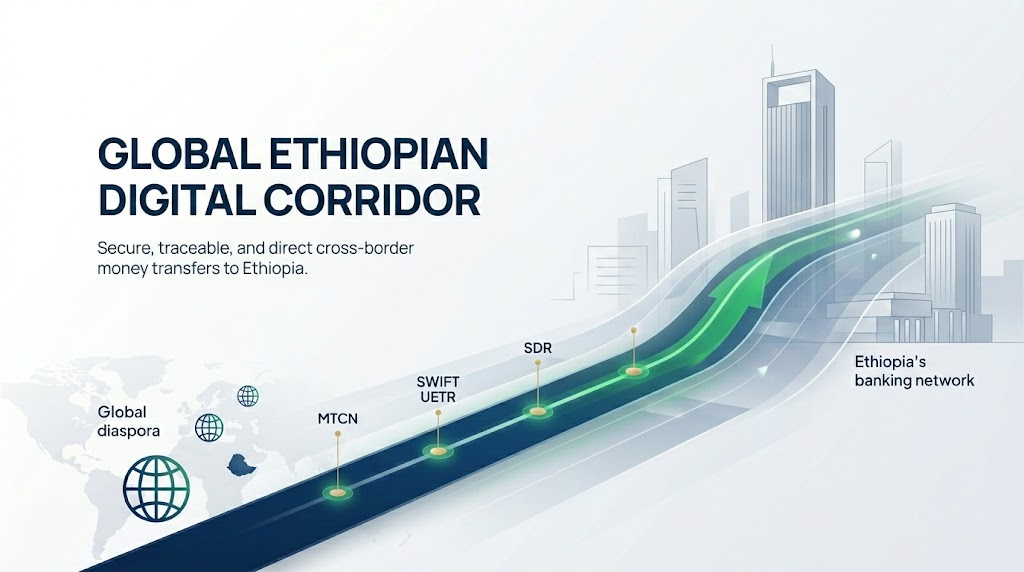
How to Track Your International Money Transfer to Ethiopia
Sending money to Ethiopia is only half the story. Learn how to track your international money transfer, interpret status updates like “available for payout,” and fix common delays so your family isn't left waiting.
How to Manage Foreign Currency Accounts as an Ethiopian Living Abroad
Managing foreign currency accounts as an Ethiopian living abroad involves more than simple money transfers. Learn how exchange rates, diaspora banking, international regulations, and cross-border transactions work — including common challenges many people overlook.

How Ethiopia's New Securities Exchange (ESX) Will Impact the Diaspora
Ethiopia’s new stock exchange lets diaspora investors buy bonds and bank shares from just 1,000 birr — a regulated alternative to remittances and real estate. But currency risk and thin liquidity are the catches most people miss.

A Complete Guide to Opening a Diaspora Bank Account in Ethiopia (2026 Edition)
Opening a diaspora bank account in Ethiopia can involve foreign currency rules, identity verification, and digital banking requirements that many applicants do not fully understand. This guide explains eligibility, required documents, online banking access, and common challenges Ethiopians abroad may face in 2026.
Comments
No comments yet. Be the first to share your thoughts!