

A Complete Guide to Opening a Diaspora Bank Account in Ethiopia (2026 Edition)
Opening a diaspora bank account in Ethiopia can involve foreign currency rules, identity verification, and digital banking requirements that many applicants do not fully understand. This guide explains eligibility, required documents, online banking access, and common challenges Ethiopians abroad may face in 2026.
Introduction to Diaspora Bank Accounts in Ethiopia
For many Ethiopians living abroad, maintaining financial access to Ethiopia remains important for family support, property-related transactions, savings, and long-term financial connections. As Ethiopia’s banking sector continues to modernize, diaspora banking services have become increasingly relevant for non-resident Ethiopians and people of Ethiopian origin.
A diaspora bank account in Ethiopia is generally designed to help overseas Ethiopians manage foreign currency and access banking services while living outside the country. These accounts often operate under specific foreign currency and regulatory rules established by Ethiopian financial authorities.
Interest in diaspora banking has also grown alongside increased international remittance activity and expanding digital financial infrastructure in Ethiopia. According to the World Bank, remittances remain an important source of foreign exchange for many developing economies, including Ethiopia.
This guide explains how diaspora bank accounts typically work in Ethiopia in 2026, who may qualify, what documents are commonly required, and the practical challenges applicants may encounter during the process.
What Is a Diaspora Bank Account in Ethiopia?
Definition and Purpose
A diaspora bank account is generally a specialized account intended for Ethiopians living abroad or individuals of Ethiopian origin residing outside Ethiopia. These accounts are commonly structured to support foreign currency deposits and international financial transactions.
Unlike standard resident bank accounts, diaspora accounts may include:
Access to foreign currency services
International transfer compatibility
Non-resident banking privileges
Special documentation procedures
These accounts exist partly because Ethiopia maintains regulated foreign exchange controls and seeks to facilitate foreign currency inflows through formal financial channels.
Who Is Eligible to Open One?
Eligibility requirements can vary between financial institutions and regulatory updates, but diaspora banking services are commonly available to:
Ethiopian citizens living abroad
Foreign nationals of Ethiopian origin
Ethiopians with foreign residency permits
Some dual nationals, depending on current regulations
Applicants are usually expected to provide:
Valid identification
Proof of foreign residency
Documentation confirming Ethiopian origin where applicable
Official eligibility requirements may change over time based on updates from the National Bank of Ethiopia.
Types of Diaspora Accounts Commonly Available
Several types of accounts are commonly associated with diaspora banking services in Ethiopia.
Foreign Currency Savings Accounts
These accounts are generally used to hold funds in internationally recognized currencies such as:
US dollars
Euros
British pounds
Currency availability varies by institution.
Current or Checking Accounts
These accounts are typically designed for:
Regular transactions
Transfers
Payments
Day-to-day banking activity
Fixed Deposit Accounts
Some institutions may offer fixed-term deposit accounts denominated in foreign currency.
Investment-Linked Banking Options
Certain financial products may be connected to approved investment activities. Availability and conditions vary significantly by institution and regulation.
How Diaspora Bank Accounts Work in Ethiopia
Foreign Currency Handling Explained
Diaspora accounts are commonly linked to Ethiopia’s foreign exchange system. Deposits are usually processed through:
International bank transfers
Remittance channels
Foreign currency cash deposits where permitted
Currency conversion practices depend on:
Regulatory rules
Institutional policies
Official exchange rate systems
Exchange rates in Ethiopia may differ between official banking channels and informal markets. This article discusses only formal banking systems.
Accessing Funds Inside Ethiopia
Account holders may access funds through:
ATM networks
Branch withdrawals
Mobile banking applications
Internet banking systems
Digital banking availability has expanded in recent years as Ethiopia’s financial infrastructure develops.
International access compatibility depends on:
Banking partnerships
SWIFT connectivity
Compliance requirements
Interest, Withdrawals, and Account Limitations
Diaspora accounts may provide interest depending on account type and applicable regulations. However, interest structures vary widely across institutions.
Foreign currency withdrawals may also be subject to:
Availability limitations
Regulatory restrictions
Daily or monthly limits
In many financial systems with foreign exchange controls, access to hard currency may fluctuate based on national liquidity conditions.
Documents Required to Open a Diaspora Account
Identification Documents Typically Needed
Applicants commonly need:
A valid passport
Ethiopian origin identification documents
Foreign residency permits or government-issued IDs
Specific documentation requirements vary by institution.
Proof of Address and Residency
Banks commonly request proof of overseas residence, such as:
Utility bills
Bank statements
Government correspondence
Residency cards
These documents help institutions comply with international banking verification standards.
Additional Verification Requirements
Additional requirements may include:
Passport-size photographs
Signature verification forms
Tax identification information where applicable
Some institutions may also require notarized or certified copies.
Why Banks Request These Documents
Financial institutions generally collect these documents for:
Identity verification
Anti-money laundering compliance
Fraud prevention
International financial reporting obligations
These practices are commonly required across global banking systems.
Step-by-Step Guide to Opening a Diaspora Bank Account
Step 1 — Confirm Eligibility
Before applying, applicants should verify:
Residency qualifications
Citizenship or origin requirements
Supported countries of residence
Eligibility rules may differ between institutions.
Step 2 — Prepare Required Documents
Applicants typically prepare:
Identity documents
Residency proof
Ethiopian-origin documentation
Certified copies if required
Both digital and physical submission formats may be accepted depending on the institution.
Step 3 — Submit the Application
Applications may be submitted through:
Local Ethiopian bank branches
Overseas representative offices
Ethiopian embassies in some cases
Online onboarding systems where available
Digital application systems are becoming more common in Ethiopia’s banking sector.
Step 4 — Verification and Approval
Financial institutions generally conduct:
Identity checks
Compliance screening
Document authentication reviews
Approval timelines vary depending on:
Application completeness
Verification complexity
Institutional workload
No reliable public source is available for standardized nationwide processing timelines.
Step 5 — Account Activation and First Deposit
Once approved, applicants commonly receive:
Account details
Online banking credentials
Deposit instructions
Some institutions may require an initial deposit before full activation.
Opening a Diaspora Account Online vs In Person
Online Application Process
Digital onboarding has expanded in Ethiopia’s banking ecosystem in recent years.
Potential advantages include:
Reduced travel requirements
Faster document submission
Remote account monitoring
However, online verification procedures may involve:
Video identification
Digital signature systems
Multi-factor authentication
In-Person Branch Applications
Some applicants may still need to visit a branch for:
Original document verification
Signature confirmation
Additional compliance checks
Branch staff may also provide assistance for complex applications.
Key Differences Between Both Methods
Feature | Online Application | In-Person Application |
|---|---|---|
Convenience | Higher | Lower |
Physical presence | Often reduced | Usually required |
Document verification | Digital | Physical |
Processing variability | Institution-dependent | Institution-dependent |
Common Challenges Diaspora Applicants Face
Document Verification Delays
Common causes of delays include:
Expired passports
Inconsistent names across documents
Missing residency proof
Uncertified paperwork
Carefully reviewing documentation before submission may help reduce delays.
International Transfer Difficulties
International transfers can sometimes face:
Compliance reviews
Sender verification requests
Currency processing delays
These practices are common in international banking systems.
Accessing Online Banking from Abroad
Users abroad may encounter:
SMS verification issues
SIM card limitations
Login security restrictions
Authentication systems vary across financial institutions.
Understanding Foreign Currency Rules
Foreign exchange regulations in Ethiopia can change over time.
Common misunderstandings involve:
Currency withdrawal expectations
Conversion rules
Transfer limitations
Applicants should review current institutional policies regularly.
Important Things to Know Before Opening an Account
Foreign Currency Regulations in Ethiopia
Ethiopia operates under a regulated foreign exchange system managed by the National Bank of Ethiopia.
Foreign currency policies may evolve due to:
Economic conditions
Monetary policy adjustments
Foreign exchange availability
Transaction Limits and Restrictions
Depending on applicable regulations, institutions may apply:
Daily withdrawal limits
International transfer checks
Transaction monitoring procedures
Limits and policies vary across institutions.
Fees and Banking Charges
Possible costs may include:
Account maintenance charges
Transfer fees
Currency conversion costs
Official pricing structures vary significantly.
Security and Fraud Awareness
Users should protect their accounts by:
Avoiding suspicious links
Using strong passwords
Monitoring account activity regularly
Verifying official communication channels
Phishing and digital fraud risks affect banking users globally.
How Diaspora Banking Supports Financial Activities in Ethiopia
Sending Money to Family Members
Diaspora accounts can simplify formal remittance-related activities by allowing account holders to:
Receive international transfers
Access Ethiopian banking services
Coordinate local financial support
Property and Investment-Related Transactions
Some users rely on diaspora banking services for approved transactions connected to:
Property-related payments
Business activities
Long-term financial planning
Documentation and regulatory compliance remain important.
Supporting Long-Term Financial Connections to Ethiopia
Diaspora banking may help overseas Ethiopians:
Maintain local financial access
Participate in Ethiopia’s evolving financial ecosystem
Manage cross-border financial responsibilities
Key Terms Explained
Diaspora Account
A bank account designed for Ethiopians or people of Ethiopian origin living outside Ethiopia.
Foreign Currency Account
An account that allows deposits or balances in internationally recognized currencies rather than only Ethiopian birr.
Exchange Rate
The value of one currency compared to another currency.
SWIFT Transfer
An international banking messaging system commonly used for cross-border financial transfers.
KYC (Know Your Customer)
A banking compliance process used to verify customer identity and reduce fraud risks.
Practical Insights for Ethiopian Diaspora Users
Tips for Faster Account Approval
Applicants may improve processing efficiency by:
Ensuring document consistency
Submitting complete paperwork
Using updated identification documents
Following official institutional instructions carefully
Best Practices for Managing the Account Abroad
Good account management practices include:
Monitoring account activity regularly
Keeping contact details updated
Using secure internet connections
Understanding notification systems
Staying Updated on Regulatory Changes
Financial regulations can change over time.
Applicants should regularly review:
Official central bank announcements
Institutional policy updates
Foreign exchange guidance
Frequently Asked Questions (FAQs)
In many cases, yes. Eligibility depends on institutional requirements and current regulations.
US dollars, euros, and British pounds are commonly supported in many foreign currency banking systems, although availability varies.
Some institutions support remote onboarding, while others may require branch visits or document authentication procedures.
Processing timelines vary significantly between institutions and application complexity. No reliable nationwide standardized timeline is publicly available.
Many Ethiopian financial institutions now provide digital banking services, although availability differs by institution.
Foreign currency access may be subject to regulatory and institutional limits.
Banks commonly require updated documentation to maintain account compliance.
Many diaspora accounts are designed to support international transfers through formal banking channels.
Key Takeaways
Main Points to Remember
Diaspora accounts are designed primarily for Ethiopians living abroad
Documentation and verification are central parts of the application process
Foreign exchange regulations influence account functionality
Ethiopia’s digital banking ecosystem continues to expand
Policies and procedures may vary between institutions
Understanding compliance requirements may help reduce delays
Conclusion
Final Thoughts on Diaspora Banking in Ethiopia
Diaspora bank accounts play an important role in connecting overseas Ethiopians with Ethiopia’s financial system. These accounts are commonly used for remittances, savings, international transfers, and maintaining long-term financial access within the country.
Because Ethiopia operates within a regulated foreign exchange environment, applicants should understand that documentation, verification, and compliance requirements are important parts of the process. Policies may also evolve as Ethiopia’s banking and digital finance sectors continue developing.
Understanding how diaspora banking works can help applicants better navigate account opening procedures, foreign currency rules, and digital banking systems in 2026.
References
Explore More Ethiopia Finance Guides
Understanding Bank Mortgage Requirements for Ethiopians Abroad
How to Manage Foreign Currency Accounts as an Ethiopian Living Abroad
Top 5 Benefits of Maintaining a Non-Repatriable Birr Account
CBE Birr vs. Telebirr: Which Digital Wallet is Best for Diaspora Users?

Understanding the New NBE Foreign Exchange Market Liberalization
Ethiopia just dismantled an 80-year-old exchange rate system. The new NBE directive has reshaped how the birr is valued—and what that means for remittances and everyday currency access.

Top 5 Fastest Remittance Apps for Sending Money to Ethiopia
Explore the top 5 fastest remittance apps for sending money to Ethiopia, including transfer speeds, Telebirr support, bank deposits, cash pickup options, verification requirements, and common delays. This educational guide explains how modern Ethiopia remittance services work and what affects international money transfer processing times.
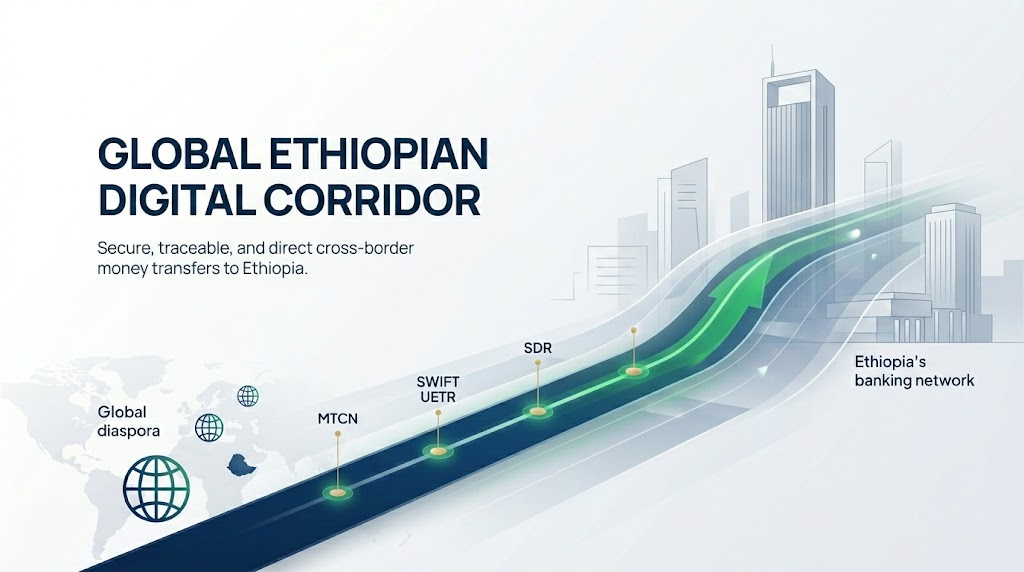
How to Track Your International Money Transfer to Ethiopia
Sending money to Ethiopia is only half the story. Learn how to track your international money transfer, interpret status updates like “available for payout,” and fix common delays so your family isn't left waiting.

How to Manage Foreign Currency Accounts as an Ethiopian Living Abroad
Managing foreign currency accounts as an Ethiopian living abroad involves more than simple money transfers. Learn how exchange rates, diaspora banking, international regulations, and cross-border transactions work — including common challenges many people overlook.

How Ethiopia's New Securities Exchange (ESX) Will Impact the Diaspora
Ethiopia’s new stock exchange lets diaspora investors buy bonds and bank shares from just 1,000 birr — a regulated alternative to remittances and real estate. But currency risk and thin liquidity are the catches most people miss.
A Complete Guide to Opening a Diaspora Bank Account in Ethiopia (2026 Edition)
Opening a diaspora bank account in Ethiopia can involve foreign currency rules, identity verification, and digital banking requirements that many applicants do not fully understand. This guide explains eligibility, required documents, online banking access, and common challenges Ethiopians abroad may face in 2026.
Comments
No comments yet. Be the first to share your thoughts!