How Ethiopia's New Securities Exchange (ESX) Will Impact the Diaspora
Ethiopia’s new stock exchange lets diaspora investors buy bonds and bank shares from just 1,000 birr — a regulated alternative to remittances and real estate. But currency risk and thin liquidity are the catches most people miss.
How Ethiopia's New Securities Exchange (ESX) Will Impact the Diaspora
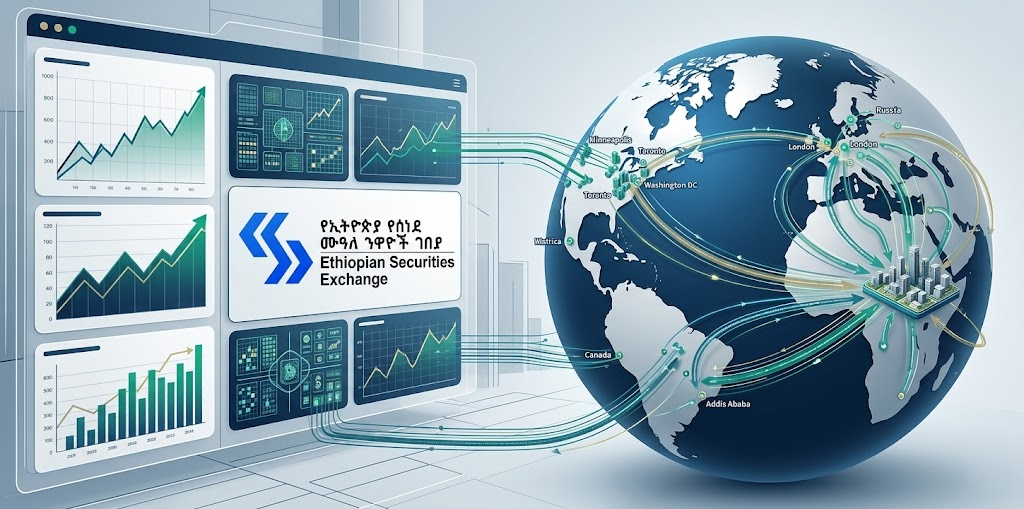
The quiet hum of a trading floor isn't the first sound that comes to mind when you think of Ethiopia. But on January 10, 2025, Prime Minister Abiy Ahmed rang the bell on the Ethiopian Securities Exchange (ESX) at a ceremony in Addis Ababa, ending a half-century drought. For the millions of Ethiopians wiring money home from Washington, London, Dubai, or Johannesburg, that bell signals something far more consequential than a photo op: the birth of a regulated marketplace where diaspora capital can do more than just support family — it can own a slice of the economy.
Here's the reality. Ethiopia's diaspora sent over $6 billion in remittances during the 2023/24 fiscal year, according to the Ethiopian Diaspora Service. That's a staggering number — roughly a 50% jump from the prior year. But remittances are a one-way street. You send. Family spends. The money is gone. Real estate, the default investment play, demands lump sums that can hit 5 to 10 million birr just for a modest apartment in Addis Ababa, plus the headaches of managing property from 7,000 miles away. The ESX introduces a third option — one where you can start with as little as 1,000 birr for bank shares or 4,700 birr for government T-bills.
This guide unpacks exactly how the ESX works, who can invest, what it'll cost, and where the landmines are buried. No sugarcoating. No sales pitch. Just a clear-eyed look at what Africa's newest stock exchange means for the Ethiopian diaspora.
Table of Contents
What Is the Ethiopian Securities Exchange (ESX)?
Why the Diaspora Should Pay Attention
Step-by-Step: How Diaspora Investors Participate
Types of Investments Available on the ESX
Key Terms for Beginners
Potential Benefits for Diaspora Investors
Important Risks and Challenges
ESX vs. Other Diaspora Investment Options
Common Misunderstandings
Frequently Asked Questions
Practical Tips for Diaspora Exploring the ESX
Summary and Key Takeaways
What Is the Ethiopian Securities Exchange (ESX)?
The Launch – A Milestone 50 Years in the Making
Ethiopia had a stock market once — in the 1960s and early 1970s. The Derg military regime shut it down after overthrowing Emperor Haile Selassie in 1974. For five decades, Africa's second-most-populous country, with over 130 million people, operated without a functioning securities exchange.
That changed on January 10, 2025, when the ESX was formally inaugurated. Trading didn't begin immediately. The real operational milestone arrived on July 11, 2025, when the National Bank of Ethiopia (NBE), the Ethiopian Capital Market Authority (ECMA), and the ESX together launched the secondary market — listing government Treasury Bills and shares of two private banks, Wegagen Bank (6,218,635 shares) and Gadaa Bank (1,232,728 shares).
The ESX isn't an informal bulletin board or a government department. It's a public-private partnership established under the Capital Market Proclamation (No. 1248/2021), equipped with an automated trading system, a broker back-office platform, and full integration with Ethiopia's Central Securities Depository (CSD) for settlement. When you place a trade, it settles electronically — not with paper certificates in a manila folder.
Core Objectives
The ESX exists to solve a basic problem: Ethiopian companies — especially private banks and insurers — have been starved of long-term capital. They've relied on retained earnings and bank loans. The exchange gives them three things:
A capital-raising engine. Companies can sell shares (equity) to the public and raise money without taking on debt.
A transparent price-discovery mechanism. Instead of haggling over share prices in private deals, the market shows what buyers and sellers actually agree on, in real time.
A regulated, supervised marketplace. ECMA licenses every broker and enforces rules around disclosure, custody, and trading conduct.
How the ESX Fits into Ethiopia's Broader Reforms
The ESX isn't an isolated project. It's part of a wider economic liberalization push that began in 2018 and accelerated in 2021 with the Capital Markets Proclamation. The government is opening sectors that were walled off for decades — telecoms, banking, logistics — to both foreign and diaspora participation. Safaricom's entry into the mobile market in 2021 was the first visible crack in the state monopoly. The ESX is the infrastructure that makes the next phase possible: allowing citizens, diaspora, and eventually foreign investors to buy into the companies being privatized or newly listed.
ECMA, established in 2021, serves as the independent regulator. It licenses capital market service providers, reviews prospectuses, and sets investor-protection rules. It's the referee — not a player.
Why the Diaspora Should Pay Attention
The Remittance Trap
Let's be blunt. Remittances are essential — they keep families fed, kids in school, and households afloat during currency crises. Ethiopia's diaspora remitted more than $6 billion in the 2023/24 fiscal year, according to the Ethiopian Diaspora Service. But from the sender's perspective, a remittance is a transfer, not an investment. There's no asset on the other side with your name on it. No return. No compounding.
Real Estate Is Not a Magic Bullet
The diaspora has poured billions into Addis Ababa condos and villas. And yes, property has delivered strong returns in certain pockets. But real estate in Ethiopia comes with specific friction:
High entry costs — even a modest apartment can require 5 to 10 million birr upfront.
Management from abroad is a logistical nightmare — tenants, maintenance, legal disputes.
Selling is slow and unpredictable — you can't liquidate a condo in 48 hours the way you can sell shares on an exchange (assuming the market has adequate liquidity).
The ESX offers a different profile: lower minimums, faster potential exit, and no toilets to fix.
The Emotional Pull
For many in the diaspora, the ESX represents something real — a chance to own a direct stake in Ethiopia's economic story. Not through a government bond sold at an embassy (many remember the Millennium Corporate Bond in 2008 and the Renaissance Dam Bond in 2011, both of which struggled to meet targets and left lingering skepticism). This time, the exchange offers an ongoing market, not a one-off fundraising drive.
Step-by-Step: How Diaspora Investors Participate
Step 1 – Confirm Your Eligibility
The ESX is open to Ethiopian citizens, foreign nationals of Ethiopian origin (those holding a Yellow Card or Ethiopian Origin ID), and, under evolving rules, fully foreign investors. In practice, diaspora members fall squarely into the priority category. You'll need:
A valid Ethiopian passport or a Yellow Card (for foreign nationals of Ethiopian origin) or a FAYDA ID
A Taxpayer Identification Number (TIN) from Ethiopia's Ministry of Revenues
For the Ethio Telecom IPO in late 2024, the government controversially restricted participation to citizens physically present in Ethiopia, explicitly excluding the diaspora. That move drew sharp criticism and is widely seen as a misstep — not the template for future ESX listings. The ESX's own mission statement explicitly includes the diaspora as a target investor base.
Step 2 – Identify a Licensed Brokerage Firm
You cannot walk onto the exchange floor and buy shares directly. You must go through a broker — a firm licensed by ECMA and admitted as a trading member of the ESX. As of early 2026, ECMA has licensed 11 capital market service providers. The following firms appear on ECMA's official licensee register:
CBE Capital Investment Bank S.C. (brokerage, investment banking)
Wegagen Capital Investment Bank S.C. (brokerage, investment banking)
Awash Capital S.C.
Siinqee Investment Bank S.C.
Gadaa Securities Dealer S.C.
ProInvest Capital P.L.C.
Zuri Capital S.C.
Ignite Capital P.L.C.
First Addis Investment Bank P.L.C.
BDO Consulting P.L.C.
CBE Capital and Wegagen Capital were among the first to receive broker licenses and are official ESX trading members.
Step 3 – Open a Trading Account (From Abroad)
Opening a brokerage account requires submitting identity documents and completing a Know-Your-Customer (KYC) process. For diaspora applicants, CBE Capital requires: Yellow Card, valid passport or FAYDA ID, resident identification or driving license, and a TIN.
There is no minimum deposit to open or activate an account with CBE Capital — you only need to fund it when you're ready to buy securities. Account activation typically takes 1 to 3 business days once documents are submitted and verified.
Remote account opening remains a work in progress. Some brokers now accept scanned documents and digital forms, but full remote KYC — the kind where you never set foot in Addis Ababa — is still being built out. The ESX's "Neway" mobile trading app has launched, and as the platform matures, expect remote onboarding to improve.
A word on power of attorney: if you authorize a relative in Ethiopia to open and operate an account on your behalf, the account must still be in your name. A POA arrangement introduces risk — make sure you trust the person completely, and understand that you remain legally responsible for the account.
Step 4 – Fund Your Account
Funding a brokerage account from abroad means converting your dollars, euros, or pounds into Ethiopian birr. This is where the ESX intersects with the remittance infrastructure this site covers extensively. You'll likely use one of these channels:
International wire transfer (SWIFT) from your foreign bank to your Ethiopian bank account, then onward to your brokerage account
Licensed money transfer operators — Western Union, MoneyGram, Ria, Mama Money, WorldRemit, and similar services — to send funds to your Ethiopian bank account
Direct deposit at a broker's partner bank (for those with existing Ethiopian bank accounts)
The exchange rate matters enormously. Ethiopia's birr has undergone significant adjustment since the July 2024 macroeconomic reforms that introduced a more flexible exchange rate regime. When you convert $10,000 into birr at a rate of approximately 125-130 ETB per USD, you receive roughly 1,250,000 to 1,300,000 birr. By the time you sell those securities and potentially repatriate funds, the rate may have shifted — and that shift could wipe out your investment gains or amplify them.
Step 5 – Place Your Trade
Once your account is funded, you instruct your broker to buy a specific security at a specific price. Two basic order types exist:
Market order: Buy at the best available price right now. Quick execution, but you don't control the exact price.
Limit order: Set a maximum price you're willing to pay. You might not get filled if nobody is selling at that level.
Brokerage commissions apply on each trade. CBE Capital charges 1.6% on main market stock trades, 2% on OTC and unlisted stocks, and 0.1% on bonds and Sukuk — plus additional fees from ESX, ECMA, and the CSD.
Types of Investments Available on the ESX
Government Treasury Bills (T-Bills)
The first securities to trade on the ESX were Government of Ethiopia Treasury Bills — short-term debt instruments with maturities of one year or less. The government plans to raise 173 billion birr through T-bill sales to help bridge a budget deficit of 188 billion birr within a total 1.9 trillion birr budget. T-bills are sold at a discount to face value; you earn the difference when they mature.
Minimum purchase: 4,700 birr for government debt securities.
Treasury Bonds
Longer-dated government debt — maturities beyond one year — used to fund infrastructure and fiscal deficits. These pay periodic interest (coupon payments) and return principal at maturity.
Shares of Ethiopian Companies (Equities)
As of the July 2025 trading launch, two banks were listed: Wegagen Bank (6.2 million shares) and Gadaa Bank (1.2 million shares). ESX CEO Tilahun Kassahun has stated that over 90 companies are expected to list within the next decade, with 50 targeted in the first three years.
What's in the pipeline? ECMA reports over 45 financial services prospectuses under review, with major listings from Awash Bank, Dashen Bank, and Bank of Abyssinia expected. All banks except the state-owned Commercial Bank of Ethiopia and the Development Bank of Ethiopia are preparing to list shares, along with one state-owned insurance company.
Minimum purchase for bank shares: Floor price of 1,000 birr.
Ethio Telecom sold 10.7% of its shares in an IPO in October 2024, but its listing on the ESX has been delayed. Government development enterprises may also be introduced to the market in the future.
What's Coming: ETFs, Mutual Funds, and Sukuk
The ESX's fixed-income framework already accommodates Shariah-compliant securities (Sukuk) and corporate bonds. Exchange-traded funds and mutual funds — baskets of securities that spread risk across multiple companies — are common in mature markets and will likely arrive as the exchange deepens. These don't exist yet on the ESX, but the regulatory scaffolding is being laid.
Key Terms Explained for Beginners
Brokerage Account. An account opened with a licensed broker that holds your cash balance and your purchased securities. Think of it as your ESX wallet and inventory system combined.
Dividend. Cash payment a company distributes to shareholders from its profits. If Wegagen Bank earns a profit and declares a dividend of 15 birr per share, and you own 1,000 shares, you receive 15,000 birr deposited into your brokerage account.
Capital Gain. The profit realized when you sell a security for more than you paid. Buy a share at 480 birr, sell at 650 birr — that 170 birr difference is your capital gain.
Market Liquidity. How quickly you can buy or sell without moving the price significantly. A new exchange with few daily trades has low liquidity. If only 50 shares of Gadaa Bank trade in a day, your order to sell 1,000 shares might sit unfilled — or force you to accept a much lower price.
Market Order vs. Limit Order. A market order executes immediately at whatever the current market price is. A limit order sets a price ceiling (when buying) or floor (when selling) and only executes if the market reaches that price.
Potential Benefits for Diaspora Investors
Access to Ethiopia's Economic Growth
Ethiopia has posted some of Africa's fastest growth rates for years. The ESX allows diaspora investors to translate that macroeconomic story into specific, owned assets — shares in profitable banks, insurers, and eventually telecoms and manufacturers.
Portfolio Diversification
Most diaspora investors hold the bulk of their wealth in Western stock indices (S&P 500, FTSE), real estate, and cash savings. Adding Ethiopian securities introduces exposure to a different economic engine — one that isn't tightly correlated with US or European markets.
Lower Entry Barriers
You don't need 5 million birr to get started. You can purchase government debt securities from 4,700 birr and bank shares from 1,000 birr, according to ESX CEO Tilahun Kassahun. Compare that to real estate, where even a down payment in a secondary city runs into the hundreds of thousands of birr.
A Regulated Environment
The ESX operates under ECMA oversight with rules on disclosure, custody, and market conduct. Client assets must be segregated from broker assets. The CSD provides centralized electronic record-keeping. This doesn't eliminate risk, but it does provide structural protections that informal investment schemes lack.
Important Risks and Challenges
Market Volatility and Losses
Share prices go down. Sometimes sharply. There's no government guarantee, no floor under stock prices, and no bailout if your investment thesis turns out to be wrong.
Currency Risk
This is the big one for diaspora investors. You convert dollars into birr to invest. If the birr depreciates — as it has done substantially under the July 2024 flexible exchange rate regime — your investment's value in dollar terms shrinks even if the birr-denominated share price holds steady. A 10% birr depreciation wipes out a 10% gain.
Liquidity Constraints
A market that launched in July 2025 with two listed banks is not a deep, liquid market. There will be days when you can't sell at any reasonable price. As more companies list and trading volumes build, liquidity should improve — but for now, this is a frontier market with all the friction that label implies.
Regulatory and Political Uncertainty
Rules can change. Tax treatment of capital gains and dividends is still being finalized. Capital controls — rules governing how money moves in and out of the country — could affect your ability to repatriate funds. The July 2024 FX reforms represented a major liberalization, but policy can shift.
Repatriation Risk
Getting your money back out — dividends or sale proceeds — isn't guaranteed to be fast or frictionless. Ethiopia's National Bank of Ethiopia has been easing retention rules and outbound payment restrictions, but the process still involves compliance checks, bank approvals, and potential delays.
Information Asymmetry
You're reading company financials from a laptop in Toronto while local investors are having coffee with the CFO in Addis. Timely access to corporate news, earnings reports, and market-moving information is harder when you're 12 time zones away.
How the ESX Compares to Other Diaspora Investment Options
ESX vs. Ethiopian Real Estate
Factor | ESX (Securities) | Real Estate |
|---|---|---|
Minimum entry | 1,000–4,700 birr | Millions of birr |
Liquidity | Days to weeks (developing) | Months to years |
Management burden | None | Tenant, maintenance, legal |
Currency exposure | Direct birr exposure | Direct birr exposure |
Income potential | Dividends (if declared) | Rental income (if tenanted) |
Price transparency | Daily market prices | Negotiated, opaque |
ESX vs. Diaspora Bonds
Ethiopia has issued diaspora bonds before — the Millennium Corporate Bond in 2008 and the Renaissance Dam Bond in 2011. Both fell short of targets.
The ESX-listed government securities differ in several key ways. Diaspora bonds were one-time offerings with fixed terms, sold through embassies. ESX T-bills and bonds trade on an ongoing secondary market, meaning you can buy and sell after the initial issuance. Pricing is market-determined, not set by decree. And the ESX platform handles multiple issuers and maturities, not just a single bond program.
ESX vs. International Stock Markets
Investing in the NYSE or LSE gives you deep liquidity, strong regulatory oversight, and easy access from anywhere. But it offers zero direct exposure to Ethiopia's domestic economy. The ESX fills that gap — with higher frontier-market risk as the trade-off.
Common Misunderstandings
"The ESX Is Only for the Wealthy"
Wrong. The minimum purchase is 4,700 birr for government T-bills and 1,000 birr for bank shares. Those numbers aren't zero, but they're accessible to a wide swath of the diaspora — far lower than a real estate down payment.
"I Have to Be in Ethiopia to Open an Account"
Right now, the process is easier in person. CBE Capital requires documents that can be submitted at their office in the CBE Headquarters Building in Addis Ababa. But remote account opening is an explicit goal. The ESX's "Neway" mobile app is live, and as digital KYC infrastructure improves, fully remote onboarding will become the standard — not the exception.
"This Is Too Risky and Complicated for Beginners"
All investment carries risk. The ESX is new, untested, and will be volatile. But "complicated" is a solvable problem. Understanding order types, brokerage fees, and the settlement process is learnable — and starting small (a few thousand birr in T-bills) lets you learn the mechanics without betting the farm.
Frequently Asked Questions
Can non-Ethiopian citizens invest in the ESX?
Yes. The ESX states that its marketplace is designed for "Ethiopians across the country, Ethiopian Diaspora as well as foreign investors." In practice, diaspora members with Ethiopian Origin ID (Yellow Card) have a clear path. Fully foreign investors can participate through licensed local brokers, subject to sectoral limits — notably a 40% cap in banking.
What is the minimum amount to start investing?
Government T-bills start at 4,700 birr. Bank shares have a floor price of 1,000 birr. There is no minimum deposit required to open or activate a brokerage account with CBE Capital.
How will dividends be paid to investors living abroad?
Dividends are deposited into your brokerage account, then transferred to your linked bank account. From there, repatriation to a foreign bank account depends on the NBE's foreign exchange rules in effect at the time.
Is the ESX regulated?
Yes. The Ethiopian Capital Market Authority (ECMA) regulates the exchange under the Capital Market Proclamation (No. 1248/2021). ECMA licenses all brokers and enforces investor-protection rules. Client assets must be held separately from broker assets. However, there is no government guarantee against market losses.
How do I transfer money from my foreign bank account to a brokerage account?
Use an international wire transfer (SWIFT) or a licensed money transfer operator (Western Union, MoneyGram, Ria, Mama Money, WorldRemit, etc.) to send funds to your Ethiopian bank account, then transfer to your brokerage account. Some brokers may eventually accept direct international transfers.
Will I have to pay taxes on ESX investments?
Tax laws governing capital gains and dividends are still being finalized. Expect both to be subject to Ethiopian taxation. Diaspora investors should also check reporting obligations in their country of residence — the US, UK, Canada, and many European countries tax worldwide income.
Can I sell my shares and move the money back out of Ethiopia?
Yes, subject to the foreign exchange regulations in effect at the time. Ethiopia has been liberalizing its FX regime, including easing rules on outbound payments and dividend repatriation, but the process requires compliance with NBE directives and may not be instantaneous.
Practical Tips for Diaspora Exploring the ESX
Learn before you buy. Read ECMA's educational materials and independent resources. Understand how markets work, what drives share prices, and what the risks are before committing a single birr.
Verify your broker. Only deal with firms listed on ECMA's official licensee register at ecma.gov.et. If someone on Telegram or WhatsApp promises guaranteed returns, block them.
Watch the exchange rate. Your real return is in your home currency, not birr. Track the NBE's official rate and the parallel market spread. The birr's trajectory matters as much as the share price.
Know your tax obligations at home. Many diaspora host countries tax worldwide income. Keep trade records and consult a cross-border tax professional.
Only commit long-term money. The ESX will take years to mature. Don't invest next month's rent, your emergency fund, or money earmarked for family remittances.
Summary and Key Takeaways
Ethiopia's Securities Exchange is a regulated, electronic marketplace that began trading government T-bills and bank shares in July 2025. For the diaspora, it introduces a formal investment channel that sits alongside — not in place of — remittances and real estate.
The practical facts: you can open a brokerage account with licensed firms like CBE Capital or Wegagen Capital, buy government debt from 4,700 birr or bank shares from 1,000 birr, and trade through an electronic platform. Diaspora investors with Ethiopian origin documentation are explicitly welcomed. Brokerage commissions run 1.6% on stocks, 0.1% on bonds.
But the exchange is young. Liquidity is thin. Currency risk is real. Repatriation isn't frictionless. And the regulatory framework is still evolving. The ESX represents a long-term development — not a shortcut to wealth, not a replacement for remittances, and not a risk-free proposition.
Conclusion
The Ethiopian Securities Exchange is the most significant financial infrastructure project Ethiopia has seen in half a century. For the diaspora, it cracks open a door that's been bolted shut since the 1970s — the ability to own a direct, regulated stake in the country's banks, insurers, and eventually its industrial backbone.
The smartest move today isn't rushing to throw money at a handful of listed bank shares. It's getting your documentation in order, understanding how the system works, and watching how the market develops in its first full year of operation. The ESX will be around for decades. The opportunity isn't going anywhere. What matters is being informed, prepared, and clear-eyed when you decide the time is right.
As the exchange matures, the connection between diaspora savings and Ethiopia's capital markets will only deepen. We'll continue covering these developments — from remittance channels and exchange rate movements to the practical realities of investing from abroad.
References
Ethiopian Securities Exchange (ESX) — Official website, Launch Announcements, and Instruments overview: esx.et
Ethiopian Capital Market Authority (ECMA) — Licensees register: ecma.gov.et/licensee
ESX — "Ethiopia Rings in Historic First Day of Government Securities Listing and Launch of Trading," July 11, 2025
Zawya / Reuters — "Ethiopia launches secondary market for t-bills, equities," July 11, 2025
The Reporter Ethiopia — "Government Plans to Raise 173 Billion Birr Through T-Bill Sales," July 12, 2025
Ria Blog / Ethiopian News Agency — "Why Ethiopia's Remittances Surged to Over $6 Billion," October 2025 (citing Ethiopian Diaspora Service data)
World Bank — "Ethiopia's new diaspora bond: will it be successful this time?" (People Move blog)
Capital Market Ethiopia — CBE Capital Account Opening Requirements and Fees
The Exchange Africa — "The Ethiopian Securities Exchange launch guide: what global investors need to know," March 2026
Kiya and Associates Law — "Navigating the New NBE Directives on Foreign Exchange Retention," October 2025
Ethiopian Business Review — "Ethiopia's foreign exchange regime," February 2026
Comments
No comments yet. Be the first to share your thoughts!