

Understanding Bank Mortgage Requirements for Ethiopians Abroad
Understanding mortgage requirements in Ethiopia can be challenging for Ethiopians abroad. This guide explains how diaspora mortgage processes work, including income verification, property rules, foreign currency considerations, and the documents banks commonly require for home financing applications.
Introduction
Many Ethiopians living abroad maintain strong financial and personal ties to Ethiopia. For some, purchasing or building a home in Ethiopia becomes part of long-term planning, family support, or future relocation goals. As a result, interest in mortgage financing and diaspora banking services has continued to grow among Ethiopian communities overseas.
An Ethiopian diaspora mortgage generally refers to a property financing arrangement designed for Ethiopians who earn income outside the country but want to purchase, build, or invest in residential property in Ethiopia. While mortgage systems in Ethiopia are still developing compared to some international markets, several financial institutions provide services tailored to non-resident Ethiopians and diaspora account holders.
Mortgage requirements in Ethiopia can differ significantly for diaspora applicants compared to local residents. Banks and financial institutions commonly place additional focus on foreign income verification, legal documentation, international banking records, and foreign currency considerations. Property verification and collateral assessment also play a major role in the approval process.
This guide explains how the Ethiopian bank mortgage process commonly works for Ethiopians abroad. Readers will learn about eligibility requirements, required documents, foreign income verification, repayment structures, exchange rate considerations, and common challenges faced during mortgage applications in Ethiopia.
Table of Contents
What Is a Mortgage for Ethiopians Abroad?
How Mortgage Financing Works in Ethiopia
Who Can Apply for a Diaspora Mortgage?
Common Mortgage Requirements
Documents Banks Usually Request
Income and Foreign Currency Considerations
Property Eligibility Rules
Down Payment Expectations
Step-by-Step Mortgage Approval Process
How Mortgage Financing Works in Practice
Common Challenges Ethiopians Abroad Face
Important Things to Know Before Applying
Key Mortgage Terms Explained
Practical Insights for Ethiopians Abroad
Frequently Asked Questions (FAQs)
Key Takeaways
Conclusion
What Is a Mortgage for Ethiopians Abroad?
Understanding the Basic Concept
A mortgage is a loan used to finance the purchase or construction of property. In most mortgage arrangements, the property itself serves as collateral for the loan. If repayment obligations are not met, the lender may have legal rights related to the property under the loan agreement.
Within Ethiopian banking systems, mortgage financing generally involves:
A financial institution providing partial funding for a property purchase or construction project
The borrower making scheduled repayments over a fixed period
Property valuation and legal verification before approval
Income assessment to determine repayment ability
Diaspora-focused mortgage programs may differ from local resident mortgage services because non-resident applicants often earn income abroad and manage finances across multiple banking systems. As a result, banks may request additional documentation related to employment, foreign income, and overseas residency.
Why Ethiopians Abroad Seek Mortgage Financing
Many Ethiopians abroad explore mortgage opportunities for different personal and financial reasons, including:
Long-term property ownership planning
Building homes for parents or relatives
Preparing for eventual return to Ethiopia
Purchasing residential property while living overseas
Diversifying personal assets across countries
Property ownership is also commonly viewed as part of broader diaspora financial planning, especially among individuals maintaining long-term ties to Ethiopia.
Types of Properties Commonly Financed
Mortgage financing in Ethiopia may apply to several types of residential properties, depending on institutional policies and legal requirements.
Common examples include:
Residential houses
Apartments
Condominium units
Residential construction projects
Land-linked housing developments
Some financing arrangements focus on completed property purchases, while others support staged construction financing for homes under development.
How Mortgage Financing Works in Ethiopia
Overview of the Ethiopian Mortgage System
Mortgage lending in Ethiopia generally follows traditional secured lending principles. The lender evaluates:
The borrower’s repayment capacity
The legal status of the property
The property’s market value
Documentation accuracy
Collateral plays a central role in mortgage approval. In most cases, the financed property itself becomes collateral for the loan.
Property valuation is also important because lenders typically assess whether the property value reasonably supports the requested financing amount.
The Role of Diaspora Banking Services
Diaspora banking Ethiopia services are designed to support Ethiopians living overseas who maintain financial relationships with Ethiopian institutions.
These services may include:
Foreign currency accounts
Diaspora savings products
International fund transfer support
Cross-border account management
For mortgage applications, banks commonly require verification of:
Foreign employment
Income stability
International banking activity
Source of transferred funds
Cross-border verification processes may involve reviewing international bank statements, employment records, and proof of lawful income sources.
How Loan Repayment Typically Works
Mortgage repayment structures usually involve monthly installment payments over a defined repayment period, often referred to as loan tenure.
Repayments commonly include:
Principal repayment
Interest charges
Additional administrative costs where applicable
Loan durations vary by institution and financing type. Some mortgage arrangements may also involve foreign currency considerations when borrowers earn income outside Ethiopia.
Exchange rate movements can influence affordability when repayments are linked indirectly or directly to foreign currency earnings.
Who Can Apply for a Diaspora Mortgage?
Eligibility Criteria for Ethiopians Abroad
Eligibility requirements differ across institutions, but diaspora mortgage applicants commonly include:
Ethiopian citizens living abroad
Individuals of Ethiopian origin residing overseas
Non-resident Ethiopians with qualifying documentation
Applicants are generally expected to provide valid legal identification and proof of overseas residence.
Employment and Income Expectations
Financial institutions typically assess whether applicants have stable and verifiable income sources.
Eligible income categories may include:
Salaried employment
Self-employment income
Business ownership income
Contract-based professional income
Income consistency and documentation quality often play a major role in approval decisions.
Residency and Documentation Requirements
Common documentation requirements may include:
Valid passport
Residence permit or visa documentation
Proof of foreign address
Employment verification letters
Tax-related records where applicable
Requirements may vary depending on the country of residence and the lender’s internal compliance procedures.
Common Mortgage Requirements for Ethiopians Abroad
Proof of Stable Income
Lenders typically evaluate whether applicants can reliably manage monthly repayments.
Common income verification methods include:
Salary slips
Employment contracts
Bank statements
Tax records
Business income documentation
Stable income history is commonly viewed as an important indicator of repayment capacity.
Credit and Financial History
Financial institutions may review:
Existing loan obligations
International banking history
Credit behavior where accessible
Repayment records
Credit assessment systems vary across countries, and international credit verification may not always follow the same standards used in local lending systems.
Required Savings or Down Payment
Many mortgage systems require borrowers to contribute an upfront payment toward the property cost.
Down payments commonly serve several purposes:
Reducing lender risk
Demonstrating borrower commitment
Lowering the financed loan amount
The required amount varies significantly across institutions and property types.
Collateral and Property Evaluation
Property evaluation commonly includes:
Legal ownership verification
Property market valuation
Construction feasibility assessments
Review of property registration documents
Construction projects may require additional engineering or progress evaluations before financing approval.
Documents Banks Usually Request
Personal Identification Documents
Applicants may commonly be asked to provide:
Passport copies
National identification documents
Ethiopian origin documentation
Residence permits
Employment and Income Documents
Income verification documents often include:
Salary slips
Employment letters
Tax returns
International bank statements
Business registration documents for self-employed applicants
Property-Related Documents
Property-related requirements may include:
Title deeds
Property valuation reports
Sale agreements
Construction permits
Architectural plans for building projects
Additional Supporting Documents
Additional documentation may include:
Power of attorney authorization
Marriage certificates
Co-applicant records
Proof of remittance transfers
Specific requirements depend on institutional policies and the complexity of the transaction.
Income and Foreign Currency Considerations
How Foreign Income Is Evaluated
Foreign income assessment often involves:
Currency conversion review
Income consistency analysis
Employer verification
Review of banking activity
Banks may also assess whether earnings are stable enough to support long-term repayment obligations.
Foreign Currency Accounts and Mortgage Processing
Diaspora foreign currency accounts may play an important role in mortgage processing.
These accounts can help institutions:
Verify international income sources
Track transferred funds
Review remittance activity
Confirm transaction consistency
Transfer verification procedures are commonly part of compliance and anti-money laundering controls used in international banking systems.
Exchange Rate Factors to Understand
Exchange rate movements can influence:
Effective repayment costs
Affordability calculations
Transfer value consistency
Currency fluctuations are commonly considered an important factor for borrowers earning income outside Ethiopia.
No reliable public source is available for institution-specific exchange rate treatment policies because practices vary between financial institutions.
Property Eligibility Rules
Types of Properties That May Qualify
Eligible property categories may include:
Finished residential homes
Condominium units
Apartment properties
Approved residential construction projects
Commercial properties may follow separate financing rules.
Legal Verification Requirements
Legal verification commonly involves:
Land ownership confirmation
Property registration review
Verification of title documentation
Review of municipal or regional approvals
Incomplete documentation can delay or prevent mortgage approval.
Construction Financing Considerations
Construction financing often operates through staged disbursement systems.
This may involve:
Releasing funds gradually
Conducting progress inspections
Reviewing construction budgets
Monitoring project completion milestones
Requirements differ depending on project size and institutional risk assessment procedures.
Down Payment Expectations
Why Down Payments Matter
Down payments help reduce lender exposure and demonstrate financial participation by the borrower.
In many mortgage systems, larger down payments may reduce financing risk because borrowers contribute more upfront capital.
Common Down Payment Structures
Down payment structures vary depending on:
Property type
Construction status
Borrower profile
Institutional lending policy
Construction financing arrangements may involve different contribution requirements compared to completed property purchases.
Additional Costs Beyond the Mortgage
Borrowers may also encounter:
Property registration expenses
Valuation service fees
Legal processing costs
Insurance-related charges
Administrative fees
Actual costs differ by institution and transaction complexity.
Step-by-Step Mortgage Approval Process
Step 1 — Initial Inquiry and Eligibility Review
The process commonly begins with:
Preliminary discussions
Basic eligibility review
Initial document submission
General financing assessment
Step 2 — Document Verification
Institutions may verify:
Employment records
Income documentation
Identity information
Property ownership records
Additional compliance checks may also occur.
Step 3 — Property Valuation and Assessment
Independent or institution-approved assessments may evaluate:
Market value
Construction feasibility
Legal status
Physical condition of the property
Step 4 — Loan Approval and Agreement
Once approved, borrowers typically review:
Loan contracts
Repayment schedules
Interest structures
Administrative obligations
Careful review of loan terms is important before signing agreements.
Step 5 — Disbursement and Repayment
Funds may be released:
Directly to sellers
In construction stages
According to project milestones
Repayment schedules generally begin after disbursement according to agreed loan terms.
How Mortgage Financing Works in Practice
Example Scenario for an Ethiopian Living Abroad
Consider a hypothetical Ethiopian professional working overseas who wants to purchase an apartment in Addis Ababa.
A simplified process may involve:
Opening a diaspora-linked account
Submitting employment and income documents
Providing property-related documentation
Completing property valuation
Receiving loan review and approval decisions
Beginning monthly repayment after disbursement
Processing timelines vary significantly depending on documentation quality and property verification requirements.
Example of Construction Financing
In construction financing arrangements:
Funds may be released gradually
Construction stages may require inspection
Additional engineering reviews may occur before each payment stage
This approach is commonly used to reduce project completion risk.
Understanding Monthly Repayment Calculations
Mortgage repayment calculations generally consider:
Total loan amount
Interest structure
Repayment duration
Administrative costs
Longer repayment periods may lower monthly installments but increase total repayment costs over time.
Common Challenges Ethiopians Abroad Face
Difficulty Verifying Foreign Income
Income verification challenges may arise because:
Documentation standards differ internationally
Some employers issue non-standard records
Translation or authentication may be required
Delays in Property Documentation
Common issues include:
Incomplete legal paperwork
Ownership verification delays
Registration inconsistencies
Missing construction permits
Exchange Rate Uncertainty
Currency fluctuations may affect:
Repayment affordability
Transfer values
Budget planning
Exchange rate risk is commonly observed in international financial arrangements.
Communication and Distance Challenges
Managing mortgage processes remotely can involve:
Delayed communication
Difficulty handling paperwork
Reliance on representatives or power of attorney arrangements
Important Things to Know Before Applying
Mortgage Terms Can Differ Between Banks
Requirements and procedures may vary because institutions use different:
Risk assessment models
Documentation standards
Property evaluation methods
Financing structures
Reviewing loan terms carefully is important for understanding obligations and conditions.
Documentation Accuracy Is Critical
Consistent and accurate records help reduce processing delays.
Common application issues include:
Mismatched names
Incomplete financial records
Missing signatures
Unverified property documents
Understanding Total Borrowing Costs
Mortgage-related expenses may include:
Interest charges
Administrative fees
Insurance costs
Valuation expenses
Registration fees
Borrowers commonly review total borrowing costs in addition to monthly repayment amounts.
Key Mortgage Terms Explained
Mortgage
A mortgage is a property-backed loan used to finance the purchase or construction of real estate.
Collateral
Collateral refers to an asset pledged as security for a loan. In mortgage financing, the property itself commonly serves as collateral.
Loan Tenure
Loan tenure refers to the length of time allowed for repayment.
Property Valuation
Property valuation is the process of estimating the market value of a property before financing approval.
Foreign Currency Account
A foreign currency account allows funds to be held in internationally recognized currencies under institutional regulations.
Debt-to-Income Ratio
Debt-to-income ratio is a financial measurement comparing monthly debt obligations to monthly income.
Practical Insights for Ethiopians Abroad
Preparing Financial Documents Early
Organizing records in advance may help reduce processing delays.
Helpful documents commonly include:
Income records
Identification documents
Banking statements
Tax records
Understanding Property Legal Status
Verifying legal ownership and registration status is commonly considered essential before mortgage processing begins.
Keeping Track of Currency Transfers
Transfer records may help institutions:
Verify source of funds
Confirm transaction history
Support compliance reviews
Planning for Processing Timelines
Mortgage approvals may take time due to:
Property verification procedures
International document reviews
Compliance checks
Valuation assessments
Processing times vary significantly across cases.
Frequently Asked Questions (FAQs)
Yes. Some Ethiopian financial institutions provide mortgage-related services for non-resident Ethiopians and diaspora account holders, subject to institutional requirements and documentation review.
Commonly requested documents include passports, proof of residence, income records, bank statements, property documents, and employment verification records.
Verification methods may include reviewing employment letters, bank statements, salary records, tax documents, and international transfer history.
In many cases, foreign income may be considered during mortgage assessment if it can be properly documented and verified.
Some institutions may support construction financing for residential projects, often through staged disbursement systems.
Approval timelines vary depending on documentation completeness, property verification, and institutional procedures.
Exchange rate fluctuations may affect affordability and transfer values for borrowers earning income outside Ethiopia.
Many mortgage systems require some form of upfront contribution, although requirements differ between institutions.
Remote applications may be possible in certain cases, though additional verification and documentation procedures are commonly required.
Property purchase financing applies to completed properties, while construction financing often involves phased funding tied to project progress.
Key Takeaways
Mortgage requirements for Ethiopians abroad commonly focus on income verification and property legality
Foreign currency earnings and diaspora banking services often play a major role in the application process
Accurate documentation may help reduce delays and verification issues
Property valuation and legal ownership checks are central parts of mortgage assessment
Mortgage structures and requirements vary across institutions and financing types
Conclusion
Mortgage financing for Ethiopians abroad involves a combination of property verification, income assessment, legal documentation review, and cross-border financial evaluation. While the Ethiopian mortgage system continues to evolve, diaspora applicants commonly encounter additional requirements related to foreign income verification, international banking records, and currency considerations.
Understanding how mortgage requirements in Ethiopia work can help applicants better prepare documentation, evaluate timelines, and understand the broader financial process involved in property financing. Legal property status, repayment capacity, and accurate financial records remain important factors throughout the mortgage review process.
Readers interested in broader financial topics may also explore related subjects such as diaspora banking systems, foreign currency accounts, remittance infrastructure, and digital financial services in Ethiopia. Educational understanding of these systems can provide useful context for navigating cross-border financial processes responsibly.
Explore More Ethiopia Finance Guides
How to Manage Foreign Currency Accounts as an Ethiopian Living Abroad
A Complete Guide to Opening a Diaspora Bank Account in Ethiopia (2026 Edition)
Top 5 Benefits of Maintaining a Non-Repatriable Birr Account
CBE Birr vs. Telebirr: Which Digital Wallet is Best for Diaspora Users?

Understanding the New NBE Foreign Exchange Market Liberalization
Ethiopia just dismantled an 80-year-old exchange rate system. The new NBE directive has reshaped how the birr is valued—and what that means for remittances and everyday currency access.

Top 5 Fastest Remittance Apps for Sending Money to Ethiopia
Explore the top 5 fastest remittance apps for sending money to Ethiopia, including transfer speeds, Telebirr support, bank deposits, cash pickup options, verification requirements, and common delays. This educational guide explains how modern Ethiopia remittance services work and what affects international money transfer processing times.
How to Track Your International Money Transfer to Ethiopia
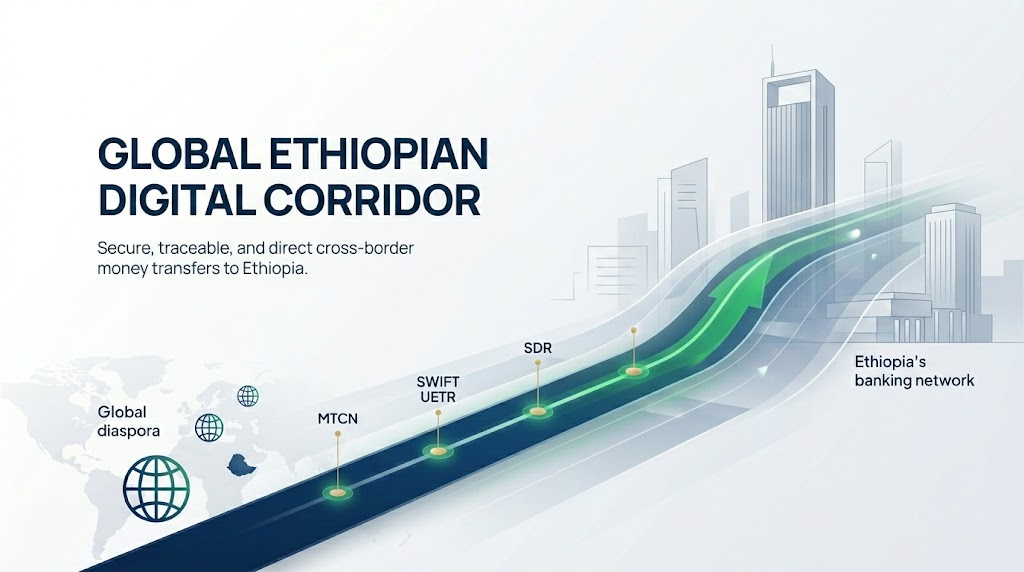
Sending money to Ethiopia is only half the story. Learn how to track your international money transfer, interpret status updates like “available for payout,” and fix common delays so your family isn't left waiting.

How to Manage Foreign Currency Accounts as an Ethiopian Living Abroad
Managing foreign currency accounts as an Ethiopian living abroad involves more than simple money transfers. Learn how exchange rates, diaspora banking, international regulations, and cross-border transactions work — including common challenges many people overlook.

How Ethiopia's New Securities Exchange (ESX) Will Impact the Diaspora
Ethiopia’s new stock exchange lets diaspora investors buy bonds and bank shares from just 1,000 birr — a regulated alternative to remittances and real estate. But currency risk and thin liquidity are the catches most people miss.

A Complete Guide to Opening a Diaspora Bank Account in Ethiopia (2026 Edition)
Opening a diaspora bank account in Ethiopia can involve foreign currency rules, identity verification, and digital banking requirements that many applicants do not fully understand. This guide explains eligibility, required documents, online banking access, and common challenges Ethiopians abroad may face in 2026.
Comments
No comments yet. Be the first to share your thoughts!