
How to Track Your International Money Transfer to Ethiopia
Sending money to Ethiopia is only half the story. Learn how to track your international money transfer, interpret status updates like “available for payout,” and fix common delays so your family isn't left waiting.
How to Track Your International Money Transfer to Ethiopia
For the Ethiopian diaspora, sending money home is an act of care. But the hours or days between clicking “send” and receiving the “delivered” confirmation can be filled with anxiety. Where is the money? Has it arrived safely? Learning to track your transfer transforms that worry into clarity.
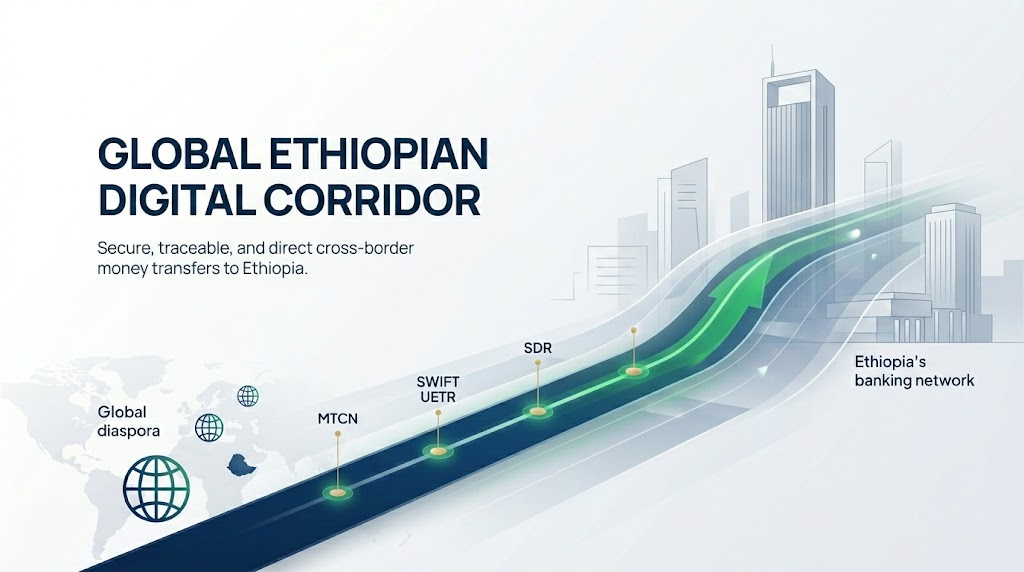
Tracking an international money transfer means following the journey of your funds from the sender’s provider, through intermediary processing networks, to the recipient’s bank account, mobile wallet, or cash pickup point in Ethiopia.
This guide explains exactly how to track your international money transfer to Ethiopia, whether you used a traditional remittance service, a bank wire, or a digital platform. We’ll explore the specific tracking systems, reference numbers, and status updates that are relevant to the Ethiopian financial landscape. By the end of this article, you will understand the different tracking methods available, how to interpret transfer status messages, and what practical steps to take if your money seems delayed.
Table of Contents
What Does It Mean to Track an International Money Transfer?
Why Tracking Your Transfer to Ethiopia Matters
Key Identifiers: The Numbers You Need to Track
Methods to Track Your Transfer (by Service Type)
Step-by-Step: How to Track Your Transfer in Practice
Understanding Your Transfer Status Updates
Common Challenges When Tracking Transfers to Ethiopia
Frequently Asked Questions (FAQs)
Key Takeaways
Conclusion
What Does It Mean to Track an International Money Transfer?
The Lifecycle of a Money Transfer
Every international money transfer moves through a predictable chain of events. Understanding this chain makes tracking far less confusing.
Initiation: You provide funds to a sending institution — a bank, a remittance operator like Western Union or MoneyGram, or a digital platform like WorldRemit or Remitly. The system generates a unique transaction identifier.
Processing: The sending institution verifies your identity, checks compliance requirements, and converts your funds into the currency needed for payout. For transfers to Ethiopia, this means sourcing Ethiopian Birr (ETB) through the foreign exchange system.
Intermediary Clearance: In a bank wire, the funds pass through correspondent banks using the SWIFT network. For remittance operators, the company’s own treasury systems or regional clearing hubs handle this step.
Receipt by a Local Ethiopian Partner: The funds land with a partner institution in Ethiopia. For cash pickup through Western Union, this includes agent banks such as the Commercial Bank of Ethiopia, Dashen Bank, Awash Bank, Bank of Abyssinia, Wegagen Bank, and United Bank. For MoneyGram, partner agents include United Bank, NIB International Bank, Enat Bank, Debub Global Bank, and Berhan International Bank. WorldRemit recipients collect from any branch of Commercial Bank of Ethiopia, Dashen Bank, Awash Bank, or Bank of Abyssinia.
Final Credit or Availability: The recipient’s bank account is credited, the mobile wallet balance updates, or the cash pickup agent confirms the funds are ready.
Tracking vs. Confirmation
A real-time status update tells you where the transfer is in the pipeline. A final delivery confirmation tells you it has reached the recipient’s end.
These two are not the same thing. A status of “processing” does not mean the money is instantly available for pickup in Addis Ababa or Dire Dawa. It means the sending institution has accepted the transfer and is moving it through its systems. A status of “delivered” on the international side means the instruction has reached the local Ethiopian partner — but the local partner may still need to complete its own settlement before cash is physically available at a specific agent counter or before a bank deposit reflects in the recipient’s account.
The Role of the Ethiopian Financial System
The National Bank of Ethiopia (NBE) oversees all foreign currency inflows, including remittances. In July 2024, the NBE issued the Foreign Exchange Directive No. FXD/01/2024, liberalizing aspects of the foreign exchange market and allowing commercial banks greater flexibility in handling remittance flows.
The NBE also publishes and periodically updates a list of licensed money transfer operators. As of November 2025, over 100 providers were officially authorized, including Telebirr Remit, Western Union International, MoneyGram, RIA Financial Services, WorldRemit, and Wise Trading. The central bank has repeatedly warned the public against using unlicensed operators, noting that such transactions can result in frozen accounts and lack of legal recourse.
Local banking infrastructure also affects tracking. Ethiopia’s Automated Transfer System (EATS) operates its Real-Time Gross Settlement (RTGS) service from 8:00 am to 7:00 pm on business days — a schedule that directly affects when bank deposits from abroad become visible.
Why Tracking Your Transfer to Ethiopia Matters
Peace of Mind for Sender and Recipient
When you send money home for school fees, medical bills, or daily household expenses, the gap between sending and receiving creates real stress. A recipient who walks to an agent location only to find the funds not yet available wastes time and money. Tracking removes the guesswork. You know whether to tell your family “go now” or “wait until tomorrow morning.”
Early Detection of Delays or Errors
A mismatched recipient name, an incorrect bank account number, or a compliance flag can stall a transfer for days. Tracking lets you spot these issues before funds bounce back entirely. If a status sits at “processing” for unusually long, you can contact support while there is still time to correct the problem.
Building Financial Awareness
Every transfer you track teaches you something about how cross-border money movement works in Ethiopia’s specific environment. You learn that bank deposits depend on Ethiopian banking hours — typically 9 AM to 5 PM local time. You learn that weekends and public holidays pause processing. This knowledge helps you choose the right transfer method next time, not based on marketing claims, but on how the systems actually behave.
Key Identifiers: The Numbers You Need to Track
The MTCN (Money Transfer Control Number)
The Money Transfer Control Number is the primary tracking key for cash pickup remittances. Western Union uses a 10-digit MTCN. MoneyGram’s reference number is typically 8 digits. WorldRemit uses an 8-digit transaction reference number; transfers to Ethiopia for cash pickup often begin with the prefix WRETH.
You find the MTCN on your printed receipt, in your confirmation email, or in the transaction history of the operator’s app. Without this number, neither you nor the recipient can check the transfer’s status through the standard tracking portal.
SWIFT/UETR and Bank Reference Numbers
When you send a wire transfer directly to an Ethiopian bank account — for example, to the Commercial Bank of Ethiopia, Dashen Bank, Awash Bank, or Bank of Abyssinia — the SWIFT network assigns a Unique End-to-End Transaction Reference (UETR). The UETR is a 36-character hexadecimal string that follows the payment through every bank it touches, from initiation to final credit. SWIFT’s GPI (Global Payments Innovation) tracker uses the UETR to provide end-to-end visibility.
You also need the receiving bank’s SWIFT/BIC code. These codes follow an 8- to 11-character format identifying the bank, country, city, and branch. Below are the SWIFT codes for major Ethiopian banks:
Bank | SWIFT/BIC Code |
|---|---|
Commercial Bank of Ethiopia | CBETETAAXXX |
Dashen Bank | DASHETAAXXX |
Awash Bank | AWINETAAXXX |
Bank of Abyssinia | ABYSETAAXXX |
Sources: Commercial Bank of Ethiopia, Dashen Bank, Awash Bank, Bank of Abyssinia.
Your sending bank should provide the UETR. If it supports SWIFT GPI tracking, you can enter this reference into your online banking portal to follow the payment. Not all sending banks offer GPI tracking to retail customers, but you can always request a trace through your bank’s customer service.
Digital Transfer IDs and Mobile Wallet References
For transfers going to mobile wallets like Ethio telecom’s Telebirr, the sending app generates a transaction ID. Telebirr supports international remittances through partners such as Western Union — funds arrive into the recipient’s wallet and can be used to pay, cash out at agents, or buy telecom packages.
Remitly provides a reference number at the top of the transfer details page in its app. For cash pickup transfers, the recipient receives a reference number via SMS once the money is ready. Taptap Send offers live tracking within its app with status updates until the transfer completes.
Methods to Track Your Transfer (by Service Type)
Tracking Cash-Pickup Remittances (via MTCN)
For Western Union: go to the “Track a Transfer” page on the Western Union website or open the Western Union app. Enter the 10-digit MTCN and the sender’s country. The system returns the current status: whether funds are in transit, available for payout, or have been collected.
For MoneyGram: visit MoneyGram’s website or open its mobile app. Enter the MTCN (8-digit reference number) along with the sender’s last name and the destination country.
For WorldRemit: log into the WorldRemit app or website, navigate to your transfer history, and select the transaction. The 8-digit reference number — often starting with WRETH for Ethiopia-bound transfers — displays the current status.
In each case, you can share the MTCN with your recipient so they can also track the transfer. But never share this number publicly — anyone with the MTCN and sender’s name can potentially view the transfer status.
Tracking Bank-to-Bank Transfers Using SWIFT
Log into your online banking portal and locate the outgoing wire. If your bank supports SWIFT GPI, the transaction details page will show the UETR and a tracking link. The GPI tracker displays key milestones: when the payment was credited to the intermediary bank, when it reached the beneficiary bank, and whether any fees were deducted along the route.
If your bank does not offer GPI tracking, contact customer service and request a wire trace. Provide the SWIFT reference number, the transfer amount, the date, and the receiving bank’s SWIFT code. The bank can query the SWIFT network and report back. This process may take one to two business days.
On the Ethiopian side, some receiving banks can confirm an incoming remittance if the recipient provides the reference number. This is not a real-time online portal in most cases — the recipient typically visits a branch or calls their relationship manager — but it can verify whether the funds have reached the local bank even before the account balance updates.
Tracking Digital and Mobile Money Transfers
For digital platforms like Remitly, WorldRemit, and Taptap Send, the tracking dashboard sits inside the app itself. You see staged updates: “funds sent,” “processing,” “funds deposited to Telebirr,” and “completed.” Push notifications keep both sender and recipient informed.
If the app shows “completed” but the recipient’s Telebirr wallet balance has not updated, this usually points to a sync delay between the remittance provider’s system and Ethio telecom’s mobile money infrastructure. The recipient should check their Telebirr transaction history within the Telebirr SuperApp. If the deposit is still not visible after several hours, contact the remittance provider’s support team and reference the transaction ID.
Using an Ethiopian Bank’s Own Tracking Portal
Some Ethiopian banks offer limited incoming remittance visibility through their digital channels. This generally requires the recipient to have an active account and to know the sender’s reference number. The visibility is usually tied to a pre-advice message — a notification from the correspondent bank that funds are en route.
This is not a standardized tracking system comparable to SWIFT GPI or an MTCN lookup. It varies by bank and often requires in-person verification. If your recipient banks with the Commercial Bank of Ethiopia, Dashen Bank, or Awash Bank, have them inquire at their branch about whether incoming remittance notifications are available for their account type.
Step-by-Step: How to Track Your Transfer in Practice
Step 1: Locate Your Transaction Reference Number
Find the reference number immediately after completing your transfer. On a receipt printed at an agent location, the MTCN typically appears near the top or bottom. In an email confirmation, search for “MTCN,” “reference number,” or “transaction ID.” In an app, navigate to your transfer history and select the specific transaction.
Screenshot the reference number or save the confirmation email. A missing reference number turns a two-minute tracking check into a multi-day support inquiry.
Step 2: Visit the Official Tracking Channel
Open your provider’s official website by typing the URL directly into your browser — never through a search ad or a link sent via SMS. Phishing scams targeting remittance users are a known threat in Ethiopia. Fraudsters use text messages and phone calls to impersonate bank support staff, tricking victims into sharing tracking numbers or personal information.
Launch the official app instead of a browser if your provider offers one. Apps are generally harder to spoof than websites.
Step 3: Enter Your Details Correctly
Input mistakes are the most common reason for “not found” errors. For Western Union’s MTCN, enter exactly 10 digits with no spaces. For MoneyGram, include the sender’s last name exactly as it appears on the receipt — a misspelled name returns no results. Select the correct destination country (Ethiopia), not the sending country.
If the first attempt fails, wait a few minutes and try again. A freshly initiated transfer may not appear in the tracking system instantly.
Step 4: Read and Interpret the Status
Match the status term you see to the definitions in the section below. Do not assume that “available” means your recipient can walk into any agent location and collect cash immediately. Read the full status message, including any fine print about branch operating hours or additional verification requirements.
Step 5: Share the Status Responsibly with Your Recipient
When you confirm funds are ready, tell your recipient the specific pickup location, the exact amount in Ethiopian Birr, and what identification they need to bring. Never share the MTCN or reference number on social media, in public messaging groups, or with anyone other than the intended recipient. The MTCN combined with the sender’s name is the key to viewing — and in some cases redirecting — a transfer.
Understanding Your Transfer Status Updates
Common Status Terms and What They Mean
Status | What It Actually Means |
|---|---|
In Progress / Processing | The sending institution has accepted your transfer and is verifying compliance, converting currency, and preparing to route the funds. The money has not yet left the sending system. |
In Transit | Funds have been dispatched to the intermediary network or correspondent bank. For SWIFT transfers, this means the payment message is moving through the correspondent banking chain. For remittance operators, funds are en route to the Ethiopian partner institution. |
Available for Payout | The local Ethiopian partner has received the funds and marked them as ready. The recipient can visit an agent location with valid identification to collect. This is the status your recipient should see before making the trip. |
Delivered / Completed | The international provider has confirmed the transfer. For cash pickup, this means the agent has dispensed the cash. For bank deposits, it means the instruction has been sent to the receiving bank — but the recipient’s account may not yet reflect the credit. |
On Hold | Something triggered a compliance review, a document requirement, or a data mismatch. Contact your provider immediately with the reference number. |
Returned | The transfer could not be completed and funds are being sent back to your account or payment method. This can take several business days depending on the provider and your bank. |
The Ethiopian Context: “Available” vs. “Available for Payout”
A status of “Available” on an international tracking page does not automatically mean cash is sitting at the specific branch your recipient plans to visit. It can mean the funds have reached the local paying partner’s central treasury but have not yet been allocated to the branch-level float.
In Ethiopia, agent liquidity is a known operational reality. Research indicates that 66% of banking agents face chronic liquidity shortages, and 95% of agents are concentrated in urban areas. A rural Dashen Bank or Bank of Abyssinia branch may need time to confirm its cash position before honoring a large pickup.
Your recipient should call the specific branch to confirm the funds are physically available there — not just “in the system” — before traveling. This extra step can prevent a wasted journey.
Timeframes: Realistic Expectations for Ethiopia Transfers
Cash pickup through Western Union or MoneyGram typically updates to “available for payout” within minutes of the sender completing the transaction, assuming no compliance holds. MoneyGram states that money is typically ready for cash pickup within minutes after the transfer has been sent successfully, subject to agent operating hours and regulatory requirements.
Bank-to-bank transfers through SWIFT generally take one business day. As one remittance provider documents for Ethiopia: “Transfers take 1 business day. Example: sent on Monday → arrives Tuesday.” This assumes the transfer was initiated during Ethiopian banking hours. A wire sent on Friday evening may not credit until Monday or Tuesday.
Mobile wallet transfers to Telebirr can be near-instant — recipients often receive notifications and funds within moments of the transfer completing on the sending side.
Ethiopian banks typically operate from 9 AM to 5 PM local time. Transactions initiated outside these hours may not process until the next business day. The RTGS system runs from 8:00 am to 7:00 pm on business days.
Common Challenges When Tracking Transfers to Ethiopia (and How to Address Them)
Status Not Updating or “Not Found” Error
You enter the MTCN and the system returns “not found” or no results.
Why this happens: the transfer was just initiated and has not yet propagated to the tracking database; you entered the wrong digit count (8 digits vs. 10); you included spaces; or you selected the wrong destination country.
What to do: Double-check the number against your receipt. Wait 2 to 4 hours and try again. If the problem persists, contact the provider’s customer support. Have your receipt, the transfer amount, and the sender’s full name ready.
Transfer Delayed Due to Foreign Currency Controls
Even after funds arrive at the intermediary bank, the local crediting process can stall. Ethiopia’s foreign exchange system, while liberalized under the 2024 reforms, still involves coordination between correspondent banks, the NBE, and local commercial banks.
This is a systemic reality, not a transaction error. The NBE has stated that one goal of the 2024 reforms was to improve remittance flows and boost foreign currency reserves, but the transition to a more flexible exchange rate system can create processing lags in individual cases.
If your transfer sits “in transit” for more than three business days, request a trace from your sending bank or remittance provider.
Recipient Details Mismatch
Ethiopian banks are strict about name matching. The recipient’s name on the transfer must exactly match their government-issued ID and their bank account registration. A single letter difference — “Mariam” vs. “Maryam,” “Mohammed” vs. “Mohamed” — can cause a hold.
Ethiopian naming conventions add complexity. Many Ethiopians use their father’s given name as a second name, not a family surname. If the sender lists the recipient’s name in Western order (given name + surname) but the bank account uses the Ethiopian convention (given name + father’s name), the mismatch can trigger a manual review.
Provide recipient details exactly as they appear on official identification and as registered with the receiving bank or mobile wallet provider.
The Transfer Says “Completed” but Funds Aren’t Available
The international provider marks the transfer complete when it has successfully handed off the payment instruction to its Ethiopian partner. But the Ethiopian partner still needs to process the final credit — updating the bank account balance, refreshing the mobile wallet, or confirming the cash position at the specific agent location.
For bank deposits, the recipient’s account may not reflect the credit until the local bank’s next processing cycle. For Telebirr, the wallet balance may take a few minutes to sync even after the international provider sends the confirmation. For cash pickup, the “completed” status on the international side does not confirm that the specific branch has the cash on hand.
The practical step: have the recipient contact their bank, mobile wallet provider, or the specific agent branch directly and provide the reference number.
Frequently Asked Questions (FAQs)
Can I track a money transfer to Ethiopia without a reference number?
No, you generally cannot. The MTCN, UETR, or transaction ID is the key that unlocks the tracking system. If you lost your receipt, contact your provider’s customer support with your full name, the transfer date, the amount, and the recipient’s name. They can retrieve the reference number after verifying your identity, but the process is slower than looking it up yourself.
How long does an international transfer tracking update take?
Cash pickup statuses through Western Union and MoneyGram often update within minutes. Bank deposit statuses depend on both the sending and receiving bank systems; a SWIFT GPI tracker may show “in transit” for one to three business days. Mobile wallet transfers to Telebirr often reflect within minutes.
What is an MTCN and where do I find it?
A Money Transfer Control Number (MTCN) is a unique transaction identifier assigned by remittance operators. Western Union’s MTCN is 10 digits. MoneyGram’s is 8 digits. You find it on your printed receipt, your email confirmation, or in the transaction history of the provider’s app. Share it only with your intended recipient.
Why does my transfer show as available but the Ethiopian agent says they don’t have it?
“Available” on the international tracker can mean the funds have reached the local paying partner’s system but not yet the specific branch the recipient is visiting. Agent liquidity constraints are a known operational reality in Ethiopia. The recipient should call the specific branch to confirm the cash is physically there before traveling.
Can I track an international bank transfer to Ethiopia online?
Yes, if your sending bank supports SWIFT GPI tracking. Log into your online banking portal, find the outgoing wire, and look for a tracking link. If GPI tracking is not available, contact your bank and request a wire trace. On the Ethiopian side, the receiving bank (such as the Commercial Bank of Ethiopia or Dashen Bank) may confirm an incoming remittance if the recipient provides the reference number and visits a branch.
What happens if my tracking status has not changed for several days?
A status stuck on “processing” or “in transit” for more than three business days usually signals a compliance hold, a data mismatch, or a foreign exchange processing delay. Contact your sending provider and request an investigation. Provide the reference number, transfer amount, and date. The provider can trace the payment and identify where it is held up.
Is it safe to share my MTCN with the recipient?
Yes, sharing the MTCN with your intended recipient is necessary and safe — they need it to collect cash or verify the transfer. Never share the MTCN publicly, in group chats, or on social media. Anyone with the MTCN and sender’s name can view the transfer status.
Key Takeaways
Your MTCN, SWIFT UETR, or digital transaction ID is your first tool. Without it, you cannot track.
Western Union MTCNs are 10 digits. MoneyGram reference numbers are 8 digits. WorldRemit references for Ethiopia often begin with WRETH.
Major Ethiopian bank SWIFT codes: Commercial Bank of Ethiopia (CBETETAAXXX), Dashen Bank (DASHETAAXXX), Awash Bank (AWINETAAXXX), Bank of Abyssinia (ABYSETAAXXX).
Always track through official websites or apps. Type URLs directly — never click tracking links from unsolicited SMS or email.
“Available for payout” means the recipient can collect. “Delivered” on the international side does not guarantee the cash is physically at a specific branch.
Ethiopian banking hours (9 AM–5 PM) and the RTGS operating window (8 AM–7 PM) directly affect when bank deposits become visible.
Delays can occur due to foreign exchange processing, agent liquidity, or recipient name mismatches — not necessarily a transaction error.
Conclusion
Tracking your international money transfer to Ethiopia is straightforward once you know what reference number to use and where to enter it. Whether through a 10-digit Western Union MTCN, an 8-digit MoneyGram reference, a 36-character SWIFT UETR, or a digital app dashboard, the process provides transparency and reduces stress for both you and your family.
Different services offer different levels of tracking detail. Cash pickup statuses update within minutes. Bank deposits depend on Ethiopian banking hours and local processing cycles. Mobile wallet transfers to Telebirr often arrive almost instantly. The local Ethiopian leg of any transfer — whether it is branch-level cash availability or account balance updates — can add a short delay to the final “received” confirmation. This is a normal part of cross-border money flow, not a cause for alarm.
Being informed about tracking is one part of building your financial confidence as a sender. For more plain-language explanations of how remittances, exchange rates, and digital banking work in Ethiopia, explore our other educational resources. Knowledge turns sending money into a smooth, predictable connection.
References
The following verifiable sources were consulted in preparing this article:
Western Union — Official website: MTCN tracking number information. https://www.westernunion.com
MoneyGram — Official website: Agent locations and tracking information. https://www.moneygram.com
WorldRemit — Official website: Cash Pickup in Ethiopia page. https://www.worldremit.com
SWIFT — UETR technical documentation and GPI tracker specifications. https://www.swift.com
National Bank of Ethiopia — Foreign Exchange Directive No. FXD/01/2024 (July 2024). Coverage by Ethiopian Press Agency and EthiopianLaw.com.
National Bank of Ethiopia — Licensed Money Transfer Operators list (November 2025). Coverage by Addis Insight and TheCondia.com.
National Bank of Ethiopia — RTGS operating hours circular (March 2026). Coverage by Birr Metrics.
Telebirr / Ethio telecom — SuperApp listing: international remittance support. Google Play Store.
Remitly — Official website: Send money to Ethiopia pages and tracking information. https://www.remitly.com
Taptap Send — App Store listing: live tracking feature. Apple App Store.
LemFi — Support documentation: Transfer times by country (Ethiopia: 1 business day). https://support.lemfi.com
Ethiopian Economics Association — Agent banking scoping study: liquidity and concentration data. Cited by Refind-ISSER, University of Ghana.
Capital Ethiopia — Reporting on digital scams and phishing affecting Ethiopian banks (December 2024).
Addis Standard — Reporting on NBE unauthorized money transfer provider warnings (April 2026).
Wise — SWIFT/BIC code directory for Commercial Bank of Ethiopia, Dashen Bank, Awash Bank, and Bank of Abyssinia.
World Bank — Personal remittances data for Ethiopia (2022–2024). https://data.worldbank.org
No verifiable external references were used for the general explanations of transfer lifecycles, tracking status definitions, and step-by-step practical guidance. These sections reflect widely understood financial system operations and common user experiences, presented for educational purposes only.
Comments
No comments yet. Be the first to share your thoughts!